Can One Person Realistically Handle Kitchen Cabinet Installation Alone? An Orlando Homeowner's Guide
Why Cabinet Installation Difficulty Comes Down to One Physical Problem
Can one person realistically handle kitchen cabinet installation alone? Not without real risk. The main problem isn't skill or tools, it's physics. You need one set of hands holding the cabinet in place while another checks level and drives screws into studs. Many homeowners choose professional cabinet installation.
Here's the thing nobody tells you before you start: cabinet installation isn't hard because of the woodworking. It's hard because of gravity.
A standard upper cabinet weighs 40 to 70 pounds empty, and it needs to sit dead level while you mark stud locations, drill pilot holes, and drive screws through the back rail. Try holding that weight steady above your shoulders with one arm while you work a drill with the other. Your arms start shaking after 30 seconds, and the cabinet drifts out of level the moment you let go to grab a tool.
We see this mistake all the time in Orlando kitchens. A homeowner in Winter Garden props an upper cabinet on a ledger board, figures it's holding steady, then leans away to grab a level. The cabinet shifts a quarter inch. That doesn't sound like much, but once you hang the cabinet next to it, the gap between doors becomes obvious. Now you're pulling screws out of drywall and starting over.
- Holding cabinet weight steady while checking level in two directions at once
- Locating and marking wall studs while the cabinet blocks your view of the wall
- Driving screws at the correct angle without the cabinet tipping forward
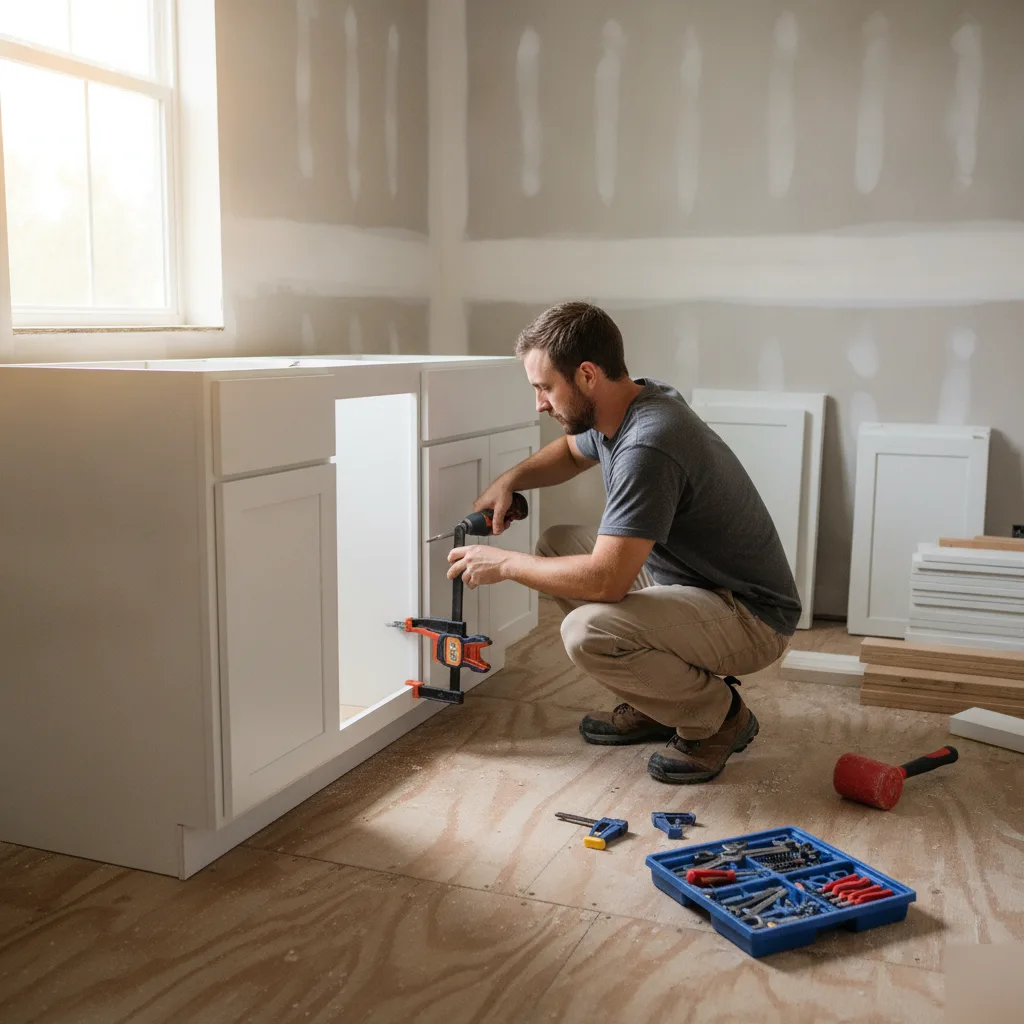
- Adjusting shims under base cabinets while keeping the face frame square
- Aligning two or more cabinets so the doors and seams match perfectly
A ledger board helps with base-level height, sure. But it doesn't solve the side-to-side leveling problem or hold the cabinet tight against the wall while you drill. That part still needs a second person, or at minimum a set of clamps and a lot of patience.
Base cabinets have their own version of this problem.
You're not lifting them overhead, but you are shimming uneven floors, which is common in older Central Florida homes, while trying to keep the face frame square to the cabinet next to it. One person can shim. One person can screw. Doing both at once, alone, usually means the cabinet ends up slightly off, and you won't notice until the countertop template reveals the gap.
This is exactly why most experienced installers work in teams of two, even on small kitchens.
Which Cabinet Tasks You Can Handle Alone
Some cabinet work is fine for one set of hands. Other steps just aren't. We've watched plenty of Orlando homeowners get through half a kitchen solo, then hit a wall on the parts that need two people or a steady jig.
Prep work is where solo installers do best. Removing old cabinets, patching drywall, marking stud lines, sanding down trim - none of that needs a second person. So if you're planning a weekend project, start there and save your energy for the harder stuff.
- Measuring and marking layout lines on the wall before install day
- Removing old cabinet boxes and doors
- Assembling flat-pack cabinet boxes on the floor before mounting
- Installing cabinet hardware, pulls, and soft-close hinge upgrades
- Attaching shelving inside base cabinets after the boxes are secured
Wall cabinets are a different story. A single 30-inch upper cabinet can weigh 60 pounds empty, more once you add hardware. Holding it flush against the wall while you drill pilot holes is nearly impossible alone, since the cabinet wants to tip the second you let go with one hand to grab the drill.
Older Orlando homes, especially ones near Winter Park or Baldwin Park, often have plaster or uneven drywall behind the cabinets. That means more shimming, more adjusting, and more hands needed to keep everything level while someone else checks the reveal gaps between doors.
Here's a scenario we see a lot. A homeowner installs the base cabinets fine on their own over a Saturday and feels good about it. Then Sunday morning they try to hang the first wall cabinet solo and end up bracing it with their knee while balancing a level on top, not exactly built to last, and definitely not how you want to start your week.
So where's the real line? Ask yourself if the task involves holding weight and using tools at the same time. If yes, that's a two-person job every time.
Custom cabinet installation adds another layer, because precision-crafted pieces need to sit exactly right for doors and drawers to close properly. That's not something to rush through solo, especially on a kitchen island or a run of wall cabinets that all need to line up.
Tools and Techniques That Help a Solo Installer
A few tools make solo cabinet work less painful. But even good gear can't replace a second set of hands for the heavy lifting.
Cabinet jacks are the biggest help for a solo installer. They hold a cabinet at the right height while you drive screws. Without one, you're bracing a cabinet with your knee and hoping it doesn't shift. We've seen homeowners in Winter Garden try this with a stack of paint cans instead of a jack. It works until it doesn't.
- Cabinet jacks or a French cleat system to hold weight while you fasten
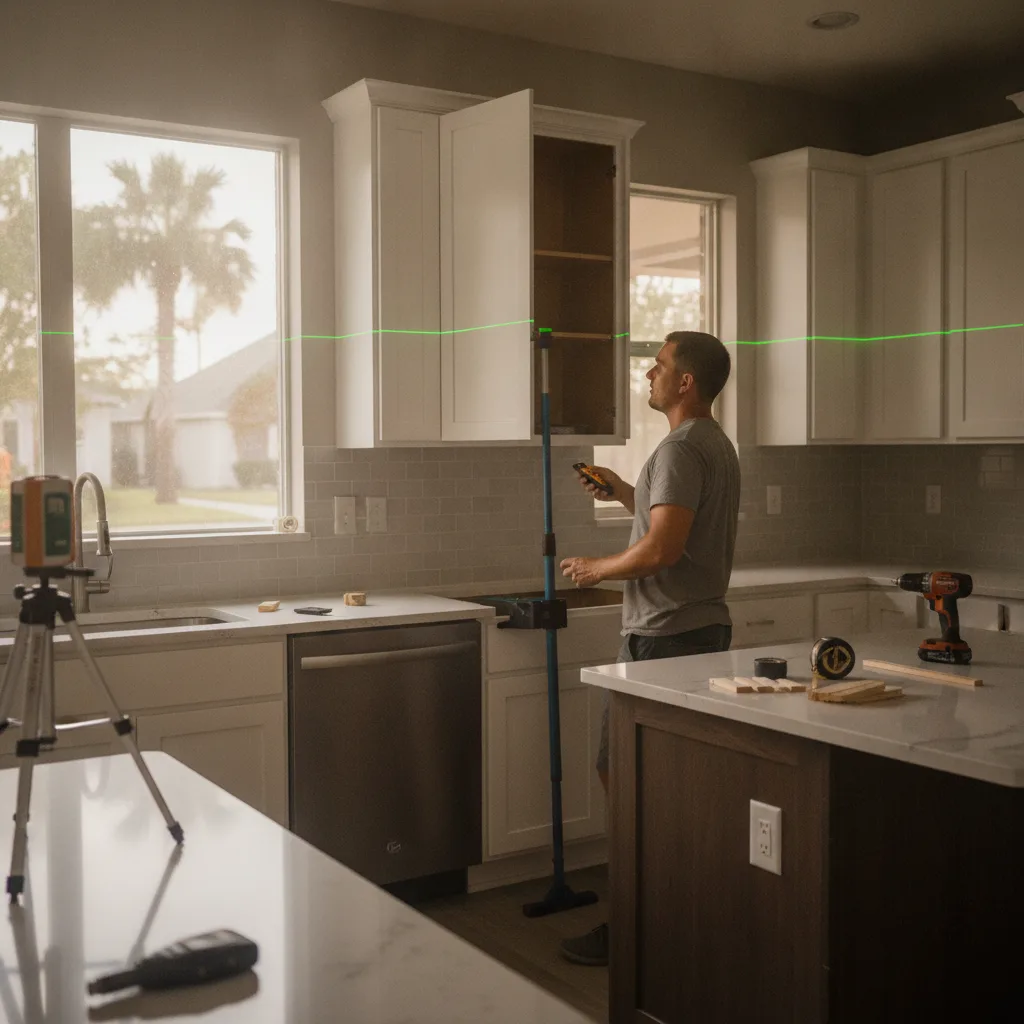
- A laser level to keep every cabinet running true across the wall
- Stud finder that reads through plaster or old lath
- Impact driver with spare batteries charged and ready
- Shims and a rubber mallet for fine height adjustments
A French cleat setup helps a lot with upper cabinets. You mount a wood strip on the wall, then hang the cabinet on it. This holds the weight for you so you're only fine-tuning position instead of fighting gravity. It's one of the oldest tricks in finish carpentry, and it still works.
Laser levels matter more in Orlando than people expect. Slab foundations settle over time, and a lot of older homes here have walls that are slightly out of square. A laser level shows you the truth instead of your eye guessing. Skip it, and you might install a perfectly level row of cabinets that still looks crooked next to a sloped ceiling or floor.
Here's the thing though. Tools help you survive solo installation, they don't help you do it well.
Good technique matters just as much as good tools. Start with the upper cabinets first, since the lowers give you a working surface to stand on once you get to them. Mark your wall studs clearly before you lift anything. Dry-fit adjoining cabinets on the floor first so you know they align before they're on the wall. And check your level after each cabinet, not just at the end, because small errors stack up fast.
None of this replaces precision-crafted cabinets built to fit your space in the first place. A cabinet that's slightly out of square from the factory makes every one of these tools and tricks harder to use. We build ours to fit tight from the start, so installation goes faster and looks right the first time. It also helps to weigh the cost and payoff of the work before deciding.
Frequently Asked Questions
When should I call a professional instead of trying this alone?
Call a professional once you reach the wall cabinets, not just the prep work. Solo installers usually do fine with measuring, removing old boxes, and assembling flat-pack units. The trouble starts when a cabinet needs to be held level while you drill, since that requires two sets of hands or a jig you may not own. If you're unsure where your kitchen falls on that line, our guide to professional kitchen cabinet installation walks through what a full-service job includes and where solo work tends to break down.
How do older Orlando homes make cabinet installation harder?
Older Orlando homes, especially near Winter Park and Baldwin Park, often have plaster walls or uneven drywall behind the cabinets. That means more shimming and more careful stud-finding before you drill. Slab foundations in Central Florida also settle over time, so walls aren't always perfectly square. A laser level helps catch those small drifts, but a second person still makes the adjustment process faster and more accurate.
What's the biggest mistake homeowners make installing cabinets by themselves?
The biggest mistake is trusting a ledger board to hold the cabinet steady while you check level. A ledger board supports height, but it does nothing for side-to-side leveling or keeping the cabinet flush against the wall. Homeowners lean away to grab a level, the cabinet shifts a quarter inch, and the gap shows up once cabinets sit next to each other. That small shift usually means pulling screws and starting over.
Can I install base cabinets alone even if I need help with upper cabinets?
Yes, base cabinets are usually manageable solo since you aren't lifting them overhead. You'll still be shimming uneven floors while keeping the face frame square, which takes patience but not a second person. Wall cabinets are a different job entirely, since holding 40 to 70 pounds steady while drilling pilot holes is hard to do alone without a cabinet jack or French cleat system.





Orlando Kitchen Cabinets Gallery
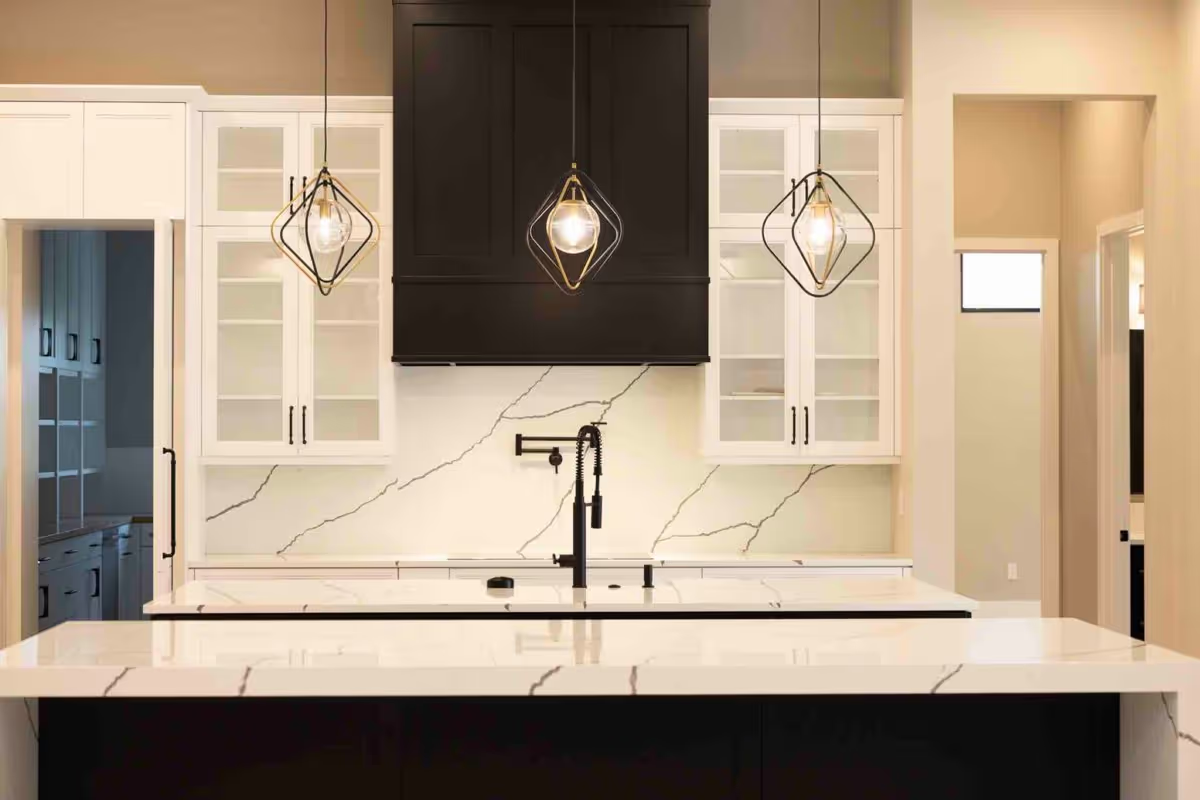
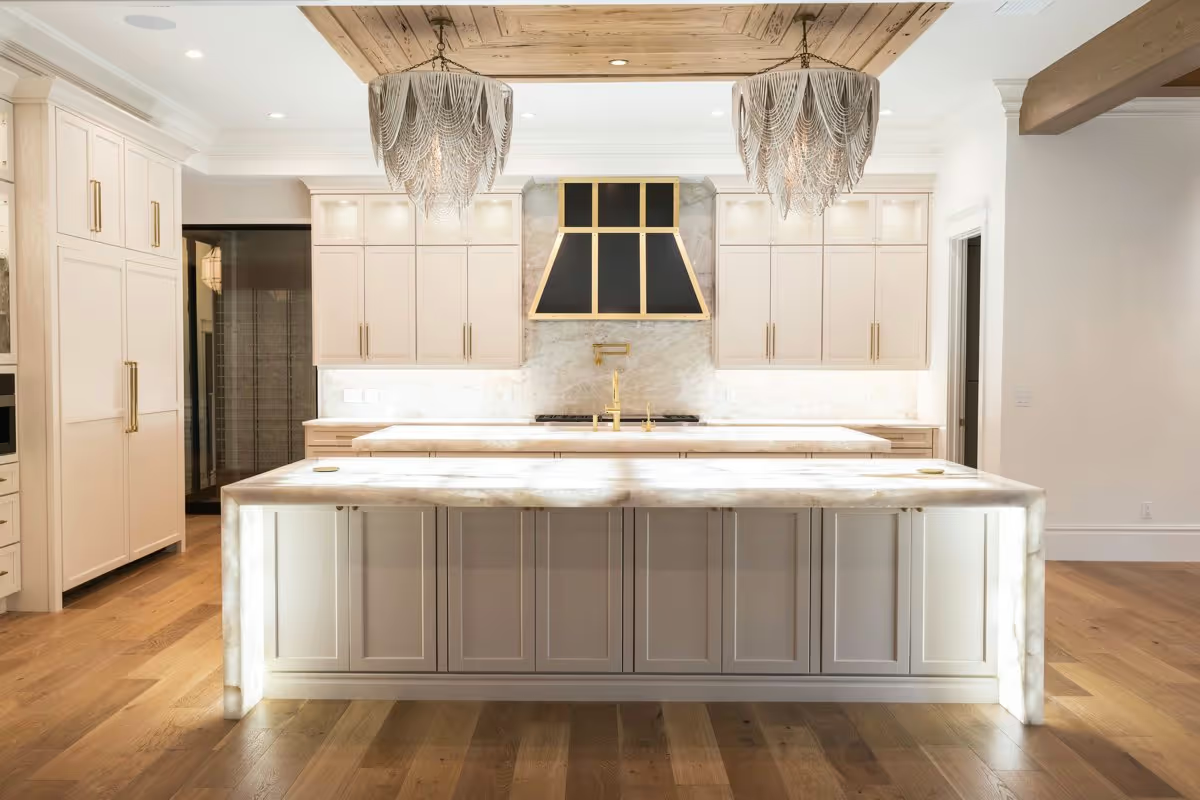
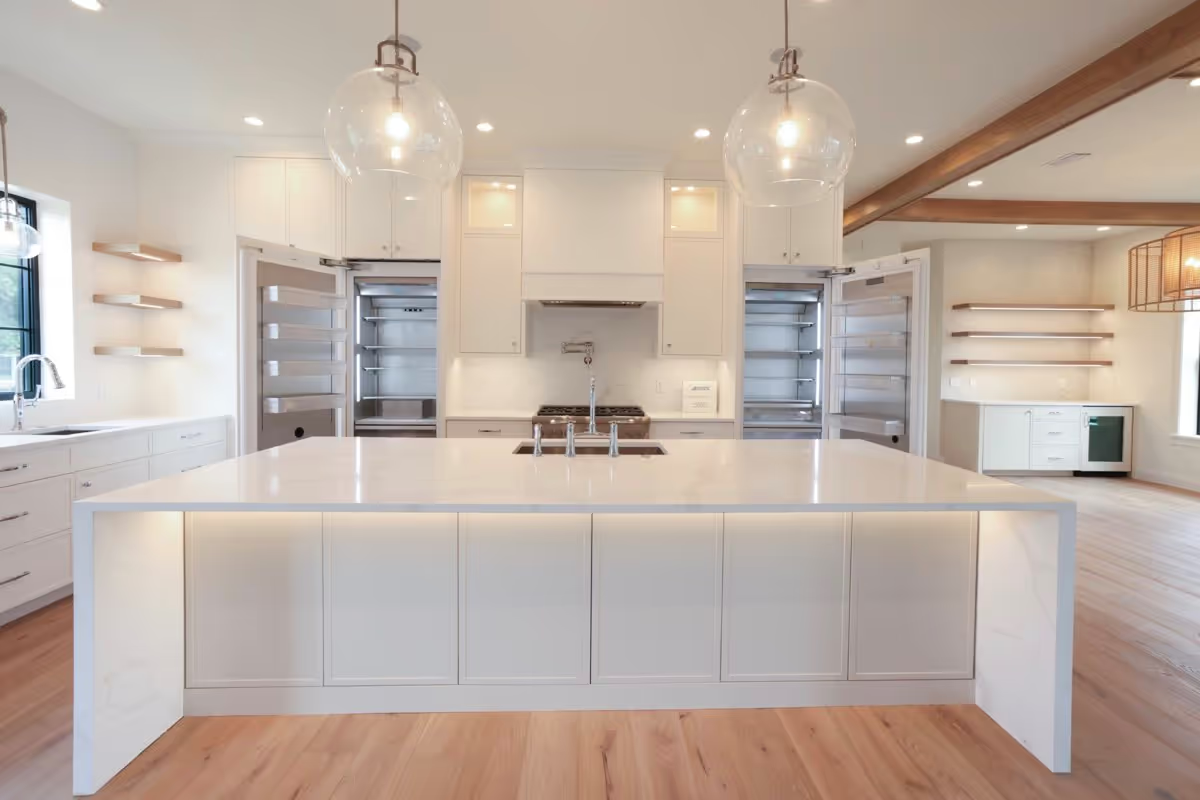
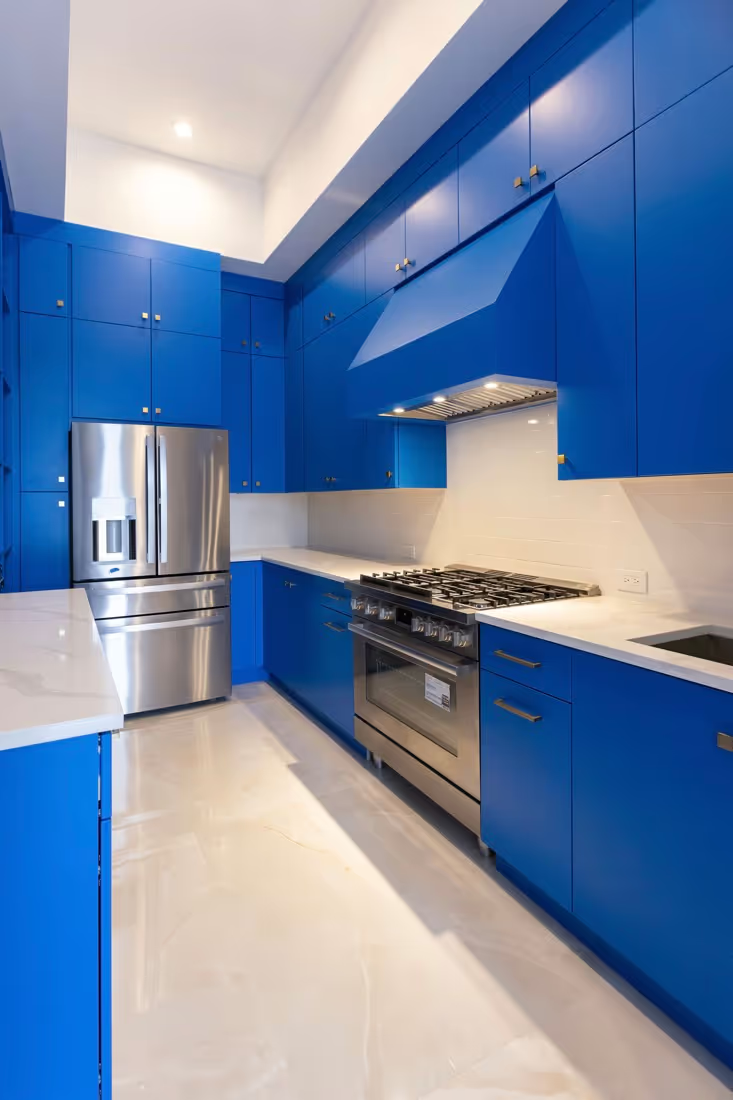
See the craftsmanship and attention to detail behind every Orlando Custom Cabinets kitchen project. Our gallery features real homes across Central Florida where we built custom cabinet solutions to fit each client's space and style. Look through our work and imagine what we can create for your kitchen.