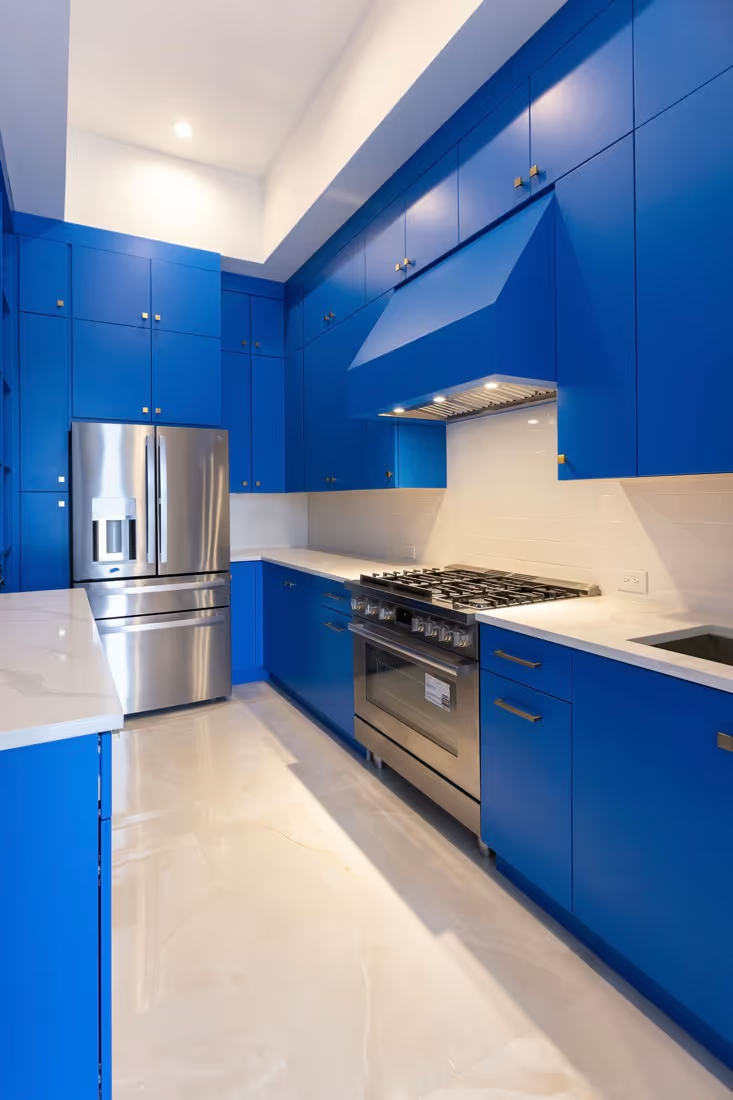
Your Cabinet Layout Affects Everything Else in the Kitchen
Most people pick their cabinet style first. Wrong move. Layout needs to come before color, door style, or anything else. The way your cabinets are arranged dictates how you cook, how you clean, and how much counter space you've actually got to work with.
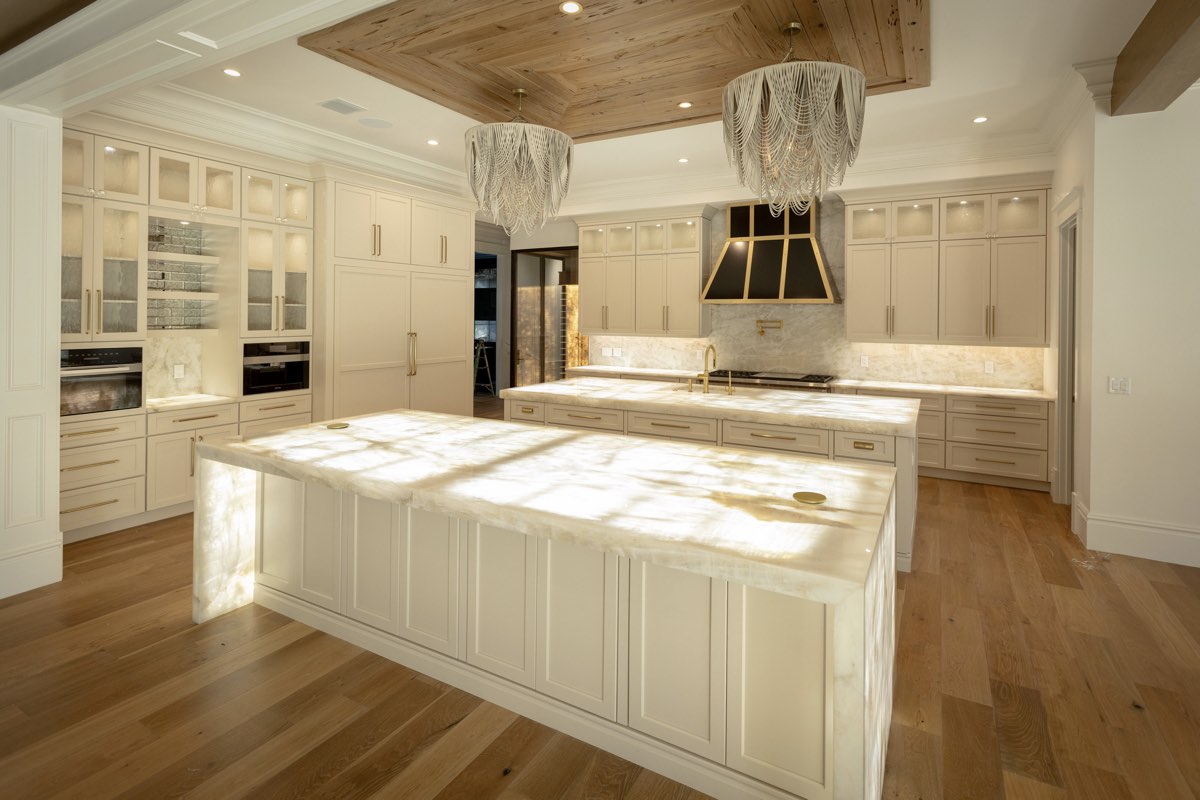
We see this constantly in Orlando kitchens. A homeowner falls in love with a shaker door at a showroom, then crams it into a layout that was never designed for how they actually live. Six months later? They're annoyed every time they open the fridge and it blocks the pantry door. Totally avoidable.
Start with the work triangle. That's the path between your fridge, sink, and stove. Kitchen designers have relied on this principle for decades because it flat-out works. The National Kitchen and Bath Association says the total distance of the work triangle should fall between 13 and 26 feet for a kitchen that actually functions well [Source: nkba.org]. Push those three points too far apart, or jam them too close together, and you'll feel it every single day.
But the triangle's just your starting point.
Where do you unload groceries? Where do you prep food? Where do you plate it before it hits the table? Each of those zones needs cabinet space nearby. A pantry cabinet near the entry just makes sense. A deep drawer cabinet next to the stove keeps pots and pans right where you reach for them. These small decisions stack up. Get them right and the kitchen flows. Get them wrong and you're walking in circles all day long.
Here's something most guides get wrong: they treat upper and lower cabinets as a matched set. They don't have to be. We've worked on kitchens in older Orlando neighborhoods, homes built in the 1960s and 70s, where the original layout had almost no upper cabinet storage on one wall. Instead of forcing symmetry, the smarter call was deep lower drawers and open shelving up top. The homeowner ended up with more usable storage and the kitchen felt bigger. Symmetry looks great in a catalog. Function wins in real life.
Corner cabinets deserve way more attention than they usually get. A dead corner, one with a standard cabinet you can barely reach into, wastes more space than most people realize. Lazy Susans, pull-out corner drawers, blind corner organizers. They all solve this differently. Which one works depends on your corner angle and how much you're willing to spend on the hardware. But that layout decision, putting a cabinet in the corner versus using a different configuration entirely, has to happen before you pick a single door style.
Ceiling height matters too. Standard upper cabinets stop about 18 inches below an 8-foot ceiling, leaving a gap that collects dust and does nothing else. Got 9- or 10-foot ceilings? That's pretty common in newer construction around the Orlando area. You can run cabinets all the way up. That top section is perfect for seasonal items or anything you don't grab daily. It also makes the kitchen feel more finished and intentional.
So before you look at a single door sample or finish swatch, draw out your kitchen on graph paper. Mark where the appliances sit. Mark the windows and doors. Then walk through a full day of cooking in your head. Where do you stand? What do you reach for? Where does the trash go? Your cabinet layout should answer every one of those questions before the first measurement gets taken.
Layout is the foundation. Style, finish, hardware. All of it gets layered on top. Skip this step and you're building on sand.
Cabinet Material and Construction Quality Make a Long-Term Difference
Most people shop for cabinets by looking at the door style and the finish. Understandable. But what's behind that door, the box itself, is what determines how long your cabinets actually last. Beautiful fronts on a box that's already warping after three years? It happens more than it should.
The box is called the cabinet carcase. It's the structural shell everything else attaches to. The most common materials are plywood, particleboard, and medium-density fiberboard (MDF). Each one behaves differently, especially in a humid climate like Central Florida's.
Plywood is the strongest option for cabinet boxes. It holds screws better than particleboard and resists moisture more reliably. The Kitchen Cabinet Manufacturers Association considers plywood construction a standard marker of higher-quality cabinetry [SOURCE TBD: KCMA product standards documentation]. In a place like Orlando, where humidity regularly sits above 70% for months at a stretch, that moisture resistance matters more than most people think.
Particleboard is cheaper and heavier. It's used in a lot of stock and semi-custom cabinets. Does fine in dry conditions. But it swells when it gets wet, and it doesn't bounce back. Ever seen a cabinet base that looks like it's bubbling near the toe kick? That's usually particleboard that got wet under the sink. We pulled a cabinet like that out of a home off Curry Ford Road last spring. The homeowner had no idea a slow drip under the sink had been doing damage for two years.
That's the thing about moisture damage. It's quiet until it isn't.
MDF is dense and smooth. Paints beautifully. But like particleboard, it doesn't love moisture, so it's most commonly used for cabinet doors and drawer fronts, not the box itself. That's actually a reasonable use for it. The problem shows up when a manufacturer uses MDF throughout the entire cabinet, including the floor and sides of the box.
Look at the inside corners of the cabinet box. Quality construction uses dado joints, a groove cut into the side panel that the shelf or bottom panel slides into. That joint is glued and sometimes stapled. Structurally sound. Cheaper cabinets just butt the pieces together and shoot a few staples through. Those joints loosen over time, especially when you're loading them with heavy pots and pans.
Drawer construction is another spot where quality separates fast. Dovetail joints on drawer boxes are a sign of solid construction. They interlock and resist pulling apart. Stapled drawer boxes look fine at first, but they're the first thing to fail when someone loads a drawer with cast iron or heavy utensils. Consumer Reports flagged drawer box construction as one of the top factors in long-term cabinet durability [SOURCE: Consumer Reports kitchen cabinet guide].
The drawer slide hardware matters too. Not just the box. Full-extension, soft-close slides give you full access to the drawer and protect the box from slamming impact over time. Cheap slides can fail in under two years in a busy kitchen. The slides are usually replaceable, but it's an unnecessary headache nobody wants two years after a renovation.
One thing most guides skip entirely: the finish on the interior of the box. Unfinished interiors absorb spills and odors. A melamine or thermofoil interior is way easier to wipe clean and resists staining. Sounds minor. After five years of cooking, you'll notice the difference.
Then there are the door hinges. European-style concealed hinges with soft-close are adjustable, and that matters because houses shift. Especially in Florida's sandy soil. Being able to re-align a door without pulling the whole cabinet apart is a real-world benefit, not just a sales pitch. We've installed cabinets across Central Florida for years, and that hinge adjustability is something we've come back to fix more times than we can count in homes that skipped it.
Construction quality isn't glamorous to look at in a showroom. But it's what you're actually buying when you invest in new cabinetry.
Cabinet Style and Finish Should Match Your Home's Long-Term Plans
A finish that photographs beautifully in a staged kitchen can feel completely wrong once it's installed in your actual home. Under your lighting. Next to your countertops. In your specific floor plan. Yeah, it's frustrating to realize that after the fact. We hear it all the time.
Before you commit to any door style or finish, think about where you want to be in ten years.
Are you planning to sell? Staying put and renovating for yourself? The answer changes everything. If you're in Orlando, FL and planning to sell within five to seven years, neutral finishes and classic door profiles tend to hold broader appeal. The National Association of Realtors found that kitchen updates are among the top features buyers notice, but highly personalized choices can actually narrow your buyer pool. [Source: National Association of Realtors, nar.realtor]
But if you're staying? Own that decision. We worked with a homeowner in the College Park neighborhood last spring who wanted deep navy shaker cabinets. Every designer she talked to pushed her toward white. She went navy. It looked incredible and fit her home's craftsman bones perfectly. Style should serve your life, not a hypothetical future buyer.
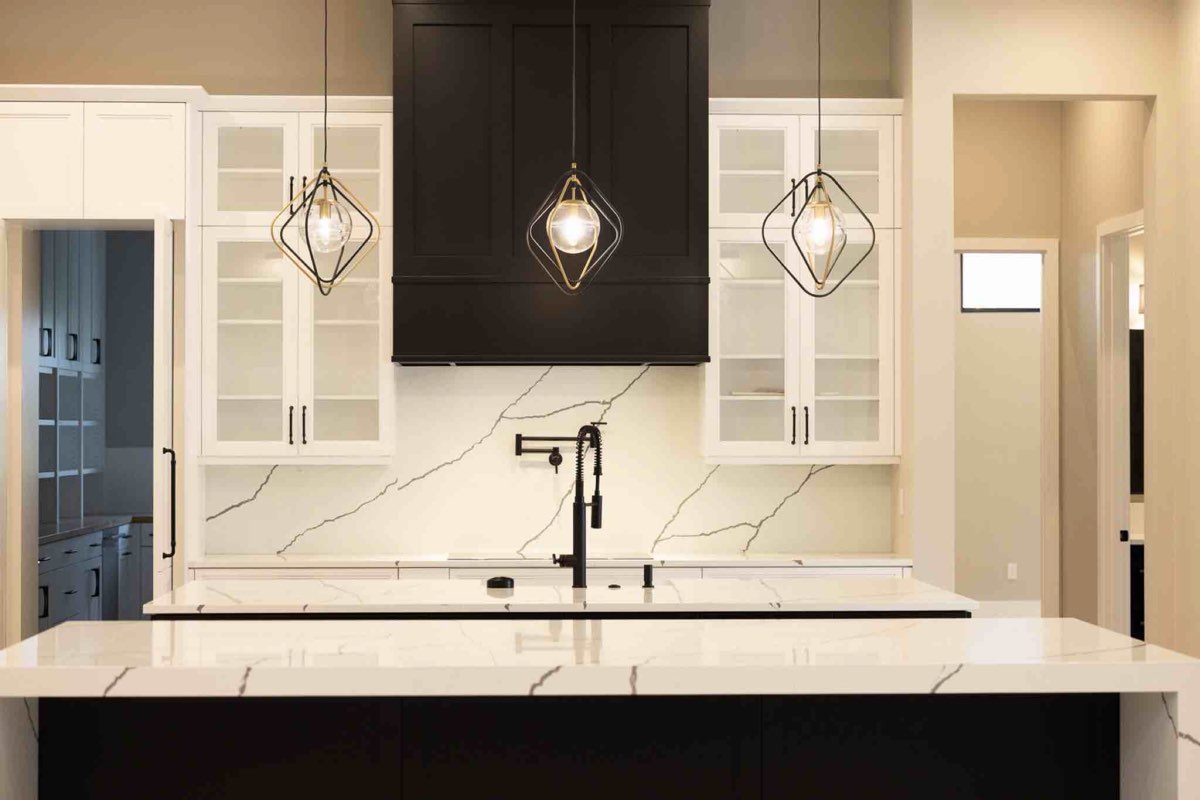
Here's what most guides get wrong: they treat cabinet style and finish as two separate decisions. They're not. The finish affects how a style reads in real light. A flat-panel door in a matte white finish feels modern and clean. That same door in a glazed cream finish reads traditional. You're choosing both at once, whether you realize it or not.
Door styles break down into a few broad families worth knowing:
- Shaker - recessed center panel, works in almost any setting, the most versatile option
- Flat-panel (slab) - no frame detail, very clean, skews contemporary
- Raised panel - more decorative, traditional feel, common in older Florida homes
- Beadboard - cottage or farmhouse character, works well in casual kitchens
Finish durability matters just as much as appearance. Florida's humidity is real. In Central Florida, kitchens near exterior walls or with poor ventilation can see finish degradation faster than you'd expect. Painted finishes are beautiful but need more maintenance than stained wood. Thermofoil can peel in high-heat areas near the stove. [SOURCE TBD: building science / cabinet manufacturer data]
We pulled cabinets last year from a kitchen in Windermere where the thermofoil finish had started lifting at the edges near the range hood. The kitchen was only eight years old. The homeowner had no clue that was a known vulnerability in high-heat zones. Nobody mentioned it at the time of purchase. That's the kind of detail that should come up before the sale, not years later when you're staring at peeling edges.
A few things worth thinking through before you lock in a finish:
- How much natural light does your kitchen get? Dark finishes absorb light and can make smaller kitchens feel closed in.
- Do you have kids or pets? Textured or slightly darker finishes hide everyday smudges far better than high-gloss white.
- What are your countertops doing? Busy granite or quartz patterns usually pair better with simpler cabinet profiles.
- What's the fixed architecture of your home? Crown molding, trim style, and ceiling height all influence which cabinet style feels native versus forced.
Hardware is part of the finish decision, not an afterthought. Brushed brass reads warm and slightly vintage. Matte black is sharp but shows dust like crazy during Florida's pollen season. Satin nickel is the safe middle ground. These details sound small, but they shift the entire tone of the room. Plan them together from the start.
Getting the style and finish right from the beginning saves you from living with a kitchen that feels slightly off. One you can't quite explain but also can't stop noticing.
If you're working through these decisions and want a second set of eyes on your layout or material choices, give us a call. Sometimes a short conversation saves a long headache.
Don't Wait Until It's Too Late
Don't wait until a small problem becomes an emergency. Call (321) 624 0760 right now.
Frequently Asked Questions
Does Orlando's humidity affect which cabinet materials I should choose?
Yes, Orlando's high humidity makes cabinet material choice more important than in drier climates. Humidity in Central Florida regularly sits above 70% for months at a time. Plywood cabinet boxes hold up better than particleboard in those conditions. Particleboard swells when it gets wet and doesn't recover. If you want cabinets that last in Orlando, plywood construction for the cabinet box is the smarter call. Our parent page on kitchen cabinet installation covers what to look for when reviewing cabinet specs.
How do I know if my cabinet layout is actually functional?
Start by checking your work triangle. That's the path between your fridge, sink, and stove. The National Kitchen and Bath Association says the total distance should fall between 13 and 26 feet for a kitchen that works well. Then think beyond the triangle. Where do you unload groceries? Where do you prep food? Your cabinet placement should answer those questions. Walk through a full day of cooking in your head before any measurements get taken.
What should I look at inside a cabinet box to judge its quality?
Look at the inside corners of the cabinet box. Quality cabinets use dado joints, where panels are cut and fitted together, then glued. Cheaper cabinets just butt the pieces together with staples. Those joints loosen over time, especially under heavy loads. Also check the drawer construction. Dovetail joints on drawer boxes are a sign of solid craftsmanship. The door style is easy to see. The box construction is what actually determines how long your cabinets hold up.
What is the biggest mistake homeowners make before getting new kitchen cabinets?
The biggest mistake is choosing a door style before planning the layout. Most people fall in love with a finish or a shaker door at a showroom, then try to fit it into a layout that doesn't work for how they actually cook. Layout has to come first. It determines your counter space, your storage zones, and how well the kitchen flows day to day. Style decisions come after the layout is locked in, not before.
Should I hire a professional to plan my kitchen cabinet layout or do it myself?
For basic updates in a straightforward kitchen, a DIY layout plan can work as a starting point. But if your kitchen has corner cabinets, unusual ceiling heights, or older construction like many homes built in Orlando's 1960s and 70s neighborhoods, a professional eye helps you avoid costly layout mistakes. Things like dead corners, misaligned work zones, and wasted ceiling space are easy to miss without experience. Getting the layout right before ordering saves time, money, and frustration.
Do ceiling heights in Orlando homes change how cabinets should be installed?
Yes, ceiling height changes what cabinet options make sense for your kitchen. Newer construction around Orlando often has 9- or 10-foot ceilings. In those homes, you can run cabinets all the way to the ceiling instead of leaving a gap that collects dust. That extra space works well for seasonal items or anything you don't grab daily. Standard upper cabinets in an 8-foot ceiling kitchen leave about 18 inches of unused space above them. Taller ceilings give you a real storage opportunity if you plan for it early.





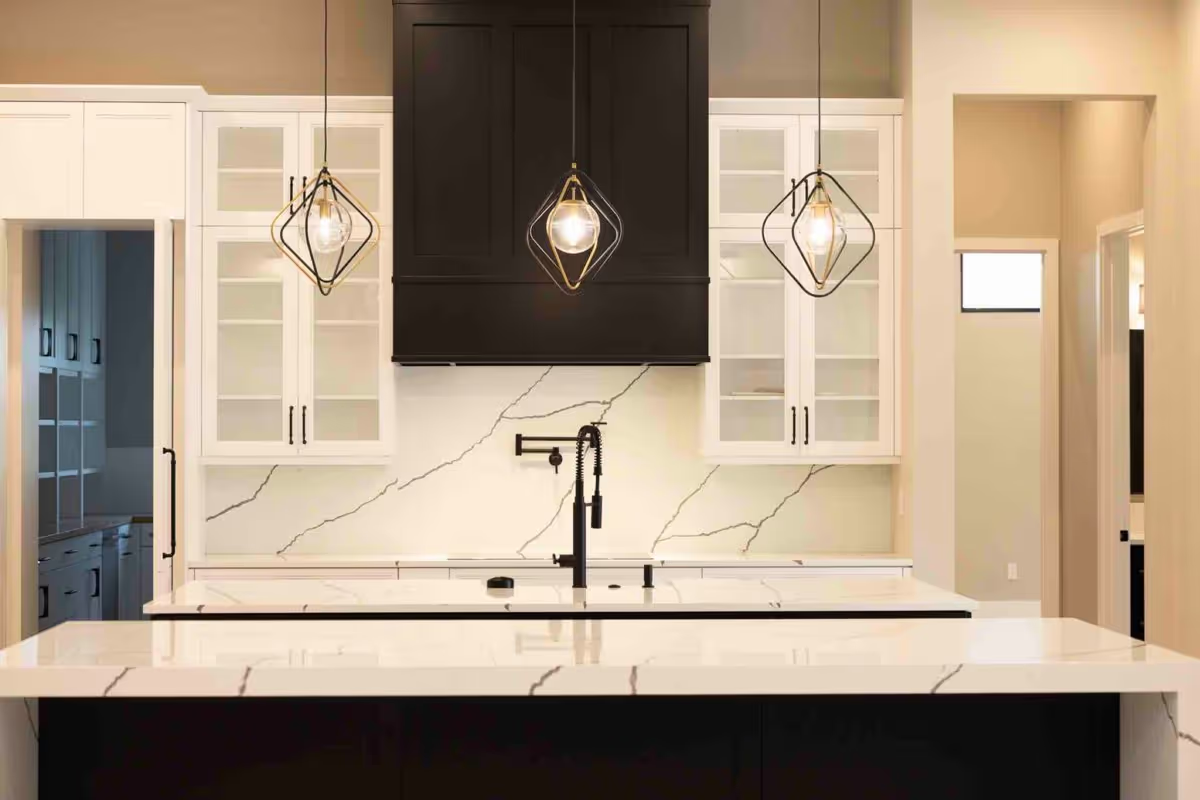
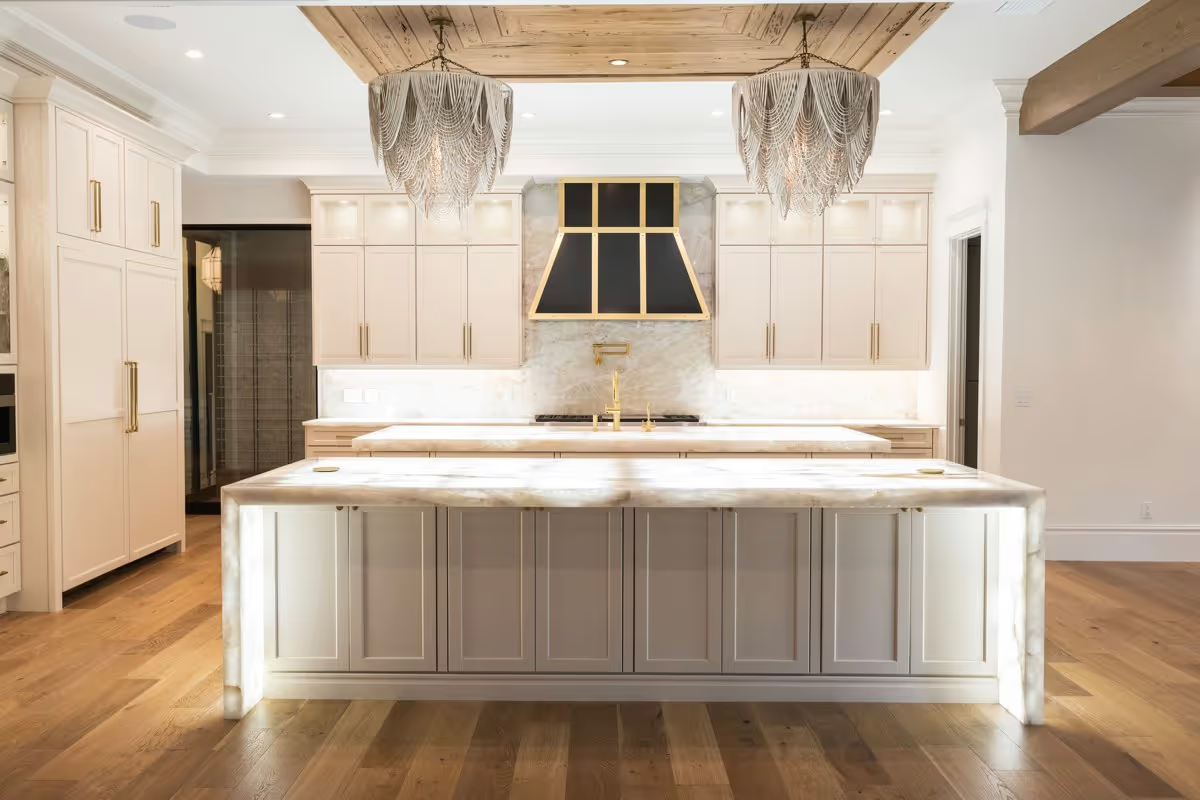
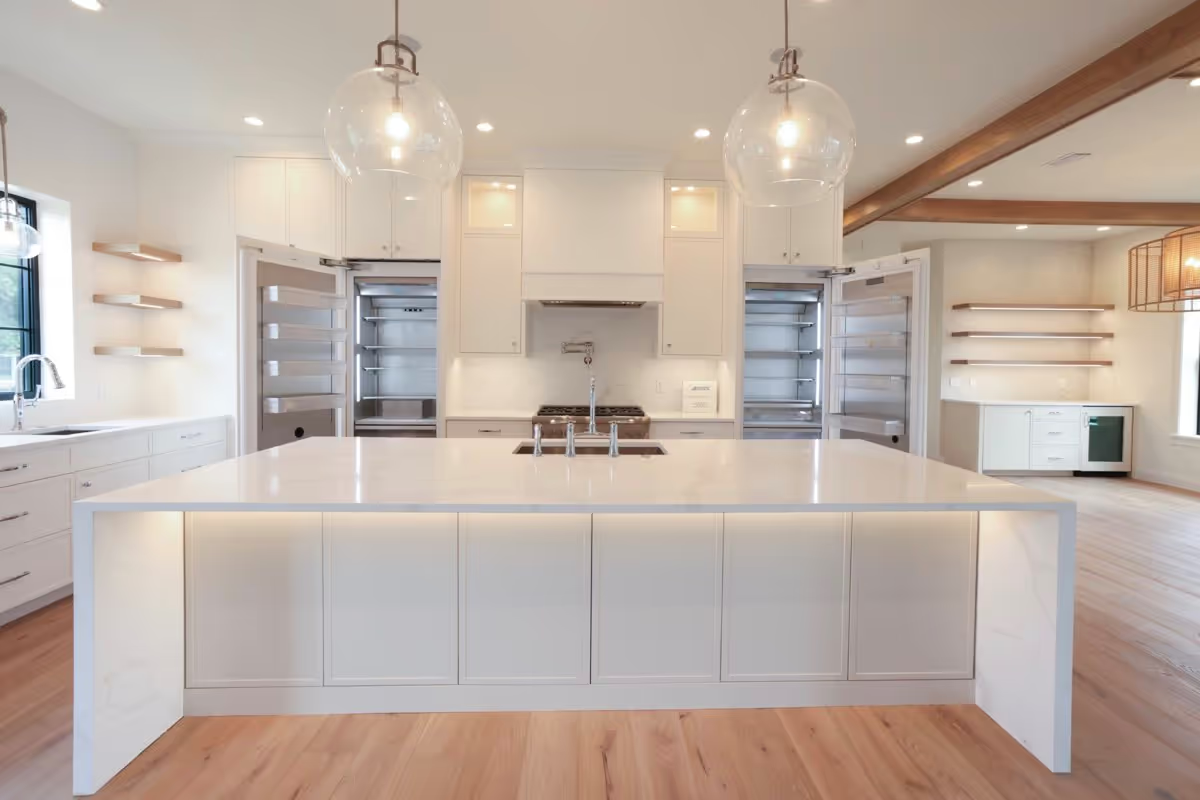
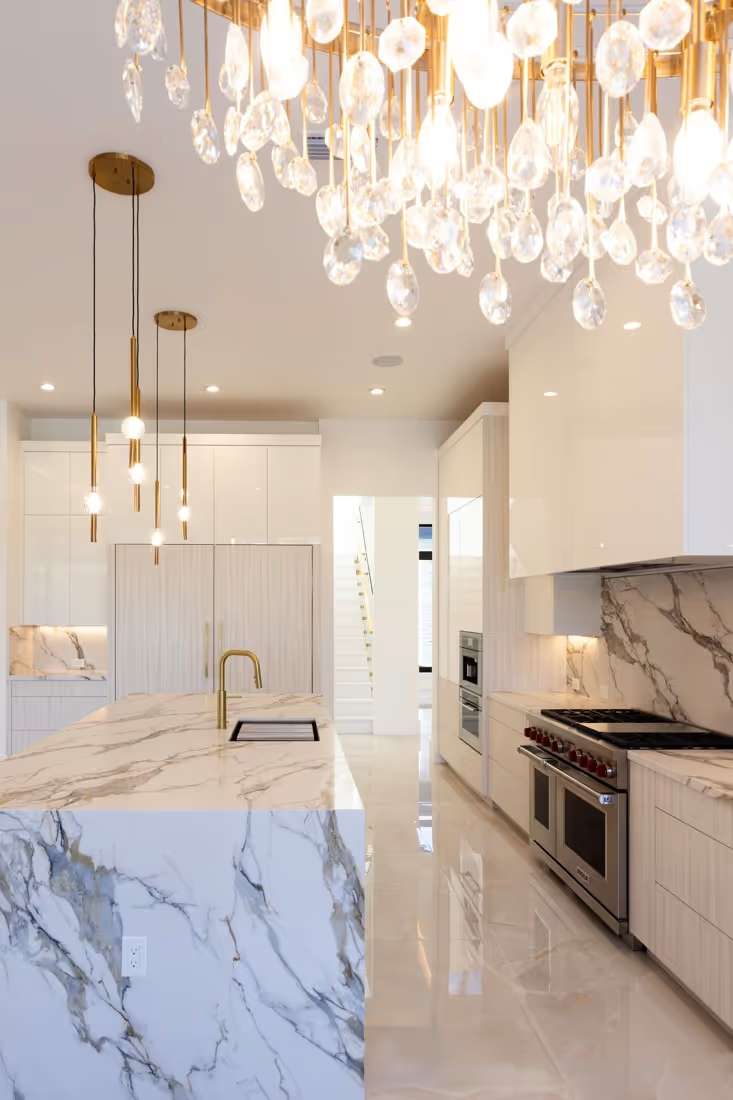
Orlando Kitchen Cabinets Gallery
See the craftsmanship and attention to detail behind every Orlando Custom Cabinets kitchen project. Our gallery features real homes across Central Florida where we built custom cabinet solutions to fit each client's space and style. Look through our work and imagine what we can create for your kitchen.