What Is the 1/3 Rule for Cabinet Hardware? A Simple Guide
The 1/3 Rule Explained in Plain Terms
Simple math. Take your cabinet door height, divide by three, and that's your target pull length. That's it. No design degree required. No complicated formula.
But here's what most guides get wrong. They treat it like it's law. It isn't. It's a proportion guide, and the goal is visual balance, not hitting an exact number. A 30-inch door works well with a 10-inch pull. A 24-inch door looks right with an 8-inch pull. Round up or down half an inch and nobody notices. Round up or down three inches? The whole cabinet looks off.
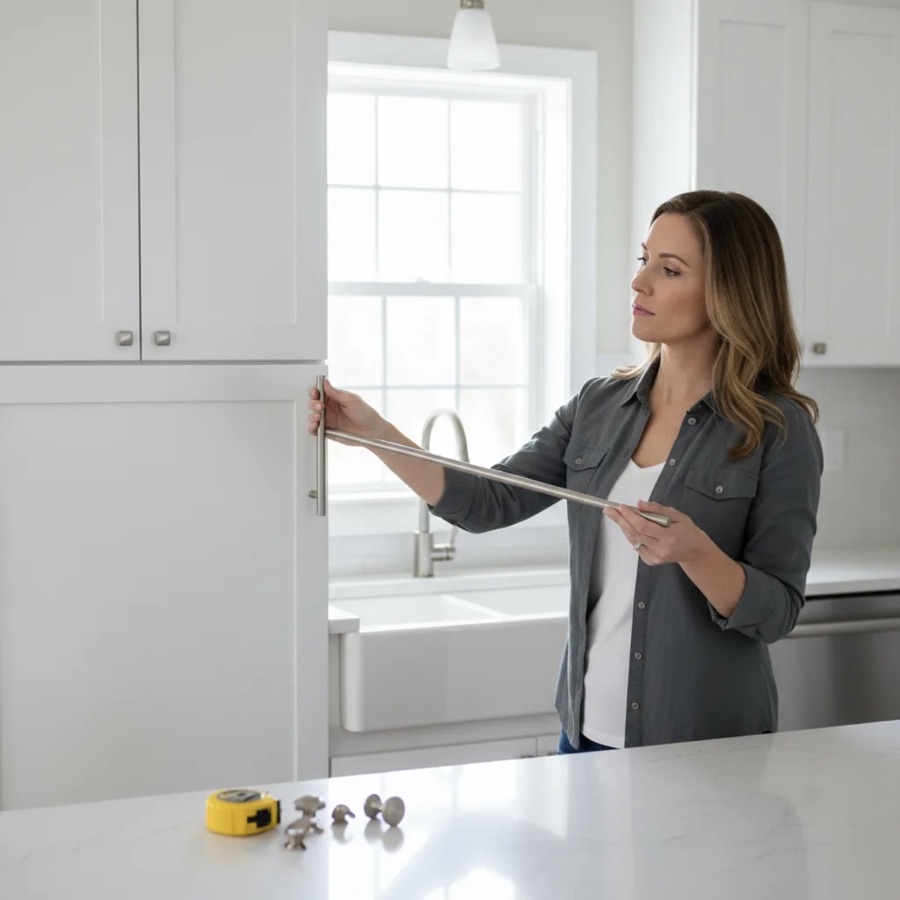
We see this constantly on jobs here in Orlando. Homeowners pick a pull they love online, it arrives, and it just feels wrong on the door. Nine times out of ten, the hardware's either too short or too long for the door height. The 1/3 rule is the fastest way to dodge that problem before you ever place an order.
Here's how to apply it:
- Measure the full height of your cabinet door in inches
- Divide that number by 3
- That result is your target pull length
- For knobs, the rule still applies, but knobs are measured by diameter, not length, so a 1.5-inch to 2-inch knob works on most standard doors
Drawer fronts follow the same logic but use a different measurement. Width instead of height. A 24-inch wide drawer front calls for roughly an 8-inch pull. Wider drawers, 36 inches or more, tend to look best with pulls in the 10 to 12-inch range. [SOURCE: NKBA design guidelines]
Upper and lower cabinets aren't always the same height. In a lot of Orlando kitchens we work in, upper doors run 30 to 36 inches tall while base cabinet doors run 24 to 30 inches. So your upper and lower pulls might actually be different lengths. And that's perfectly fine. Matching finish matters more than matching length.
Last spring we did a kitchen refresh in the Dr. Phillips area. The homeowner had already bought 20 pulls, all 3-inch bar pulls, for a mix of 30-inch upper doors and 36-inch lower drawers. The pulls looked fine on the uppers. On the wide drawer fronts? Toothpicks. We swapped the drawer pulls for 8-inch versions in the same finish, same hardware line, just a different length. The difference was immediate.
The 1/3 rule also helps if you're mixing hardware styles. Knobs on doors, pulls on drawers (a classic combo) keeps both choices in proportion with the surfaces they're mounted on. You're not guessing. You're working from an actual measurement.
A few practical notes before you grab the tape measure:
- Measure the door panel itself, not the frame or the opening
- For inset doors, measure the visible face of the door
- If your doors have a rail-and-stile frame, measure only the center panel height for a cleaner look
- Always double-check pull center-to-center spacing. That's a separate measurement from pull length [SOURCE TBD: cabinetry hardware manufacturer specs]
The math takes two minutes. Getting it right means your hardware looks like it belongs there, not like it got grabbed off a shelf at random. And in a kitchen or bathroom, that difference shows every single day.
How to Measure Your Cabinets Before Choosing Hardware
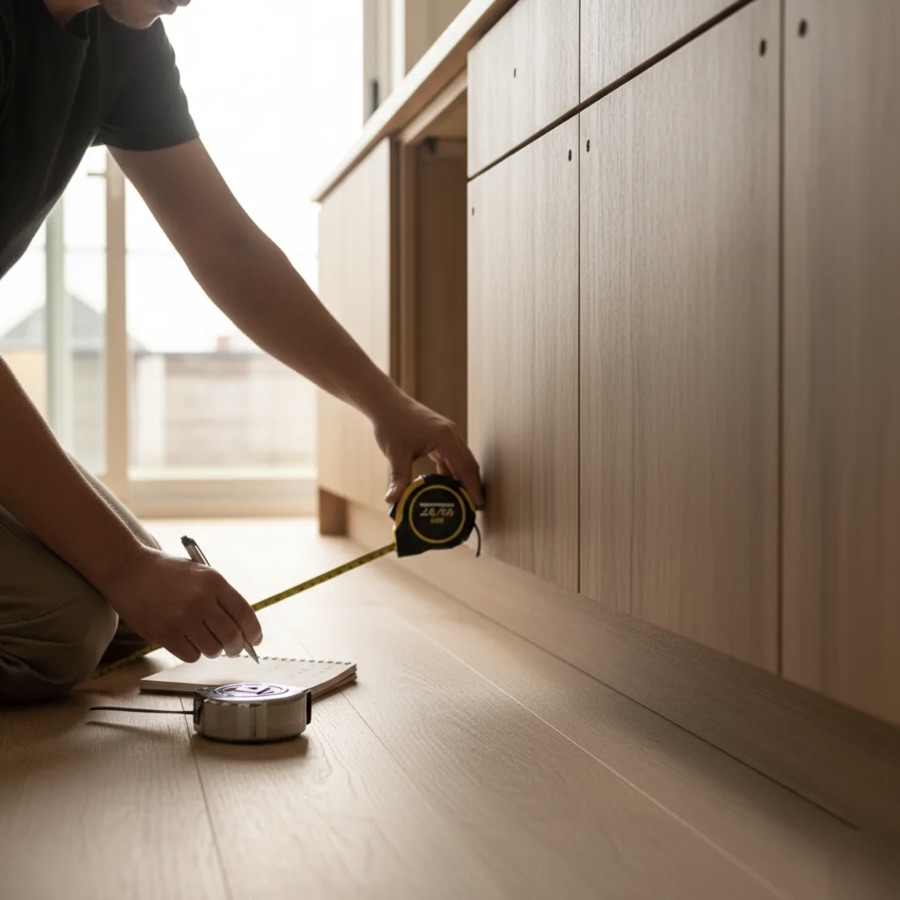
Most people pick hardware first and measure second. Wrong order. Get your numbers down before you fall in love with a pull at the hardware store. You'll save yourself a return trip. Or worse, a row of mismatched holes drilled into your cabinet faces.
Three measurements. That's all you need. Drawer front width, door width, and rail width (the flat frame around the door panel). These tell you everything. The 1/3 rule works off drawer front width specifically, so start there.
Start With the Drawer Front
Pull a tape measure across the full width of the drawer front. Not the box behind it. The face you actually see. Write it down. A standard drawer front in most Orlando, FL homes runs somewhere between 12 and 24 inches wide [SOURCE: cabinet industry standard sizing data], and your pull should land at roughly one-third of that width. So a 15-inch drawer front calls for a 5-inch pull.
Last spring, we pulled hardware off a set of builder-grade cabinets in a Winter Park kitchen. The homeowner had installed 3-inch pulls on 18-inch drawer fronts. Every drawer looked like it had a tiny handle bolted to a barn door. Swapping to 6-inch pulls fixed the whole room without touching a single cabinet. Twenty minutes of work. Total.
Measure the Door Width Too
Cabinet doors use knobs more often than pulls, but when pulls do go on doors, the same rule applies. Measure the door width at its widest point. A pull on a 12-inch door should land in the 4-inch range. Go bigger and it starts looking like it belongs on a commercial refrigerator.
Here's what most guides skip: measure door height if you're placing hardware vertically. Vertical pulls on tall shaker-style doors are popular right now, and a 42-inch upper cabinet door can handle a longer pull, sometimes up to 8 or 10 inches, placed vertically along the stile. But only if the stile is wide enough to keep the pull centered without crowding the edge. The stile, for reference, is the vertical frame piece on the door.
Check Your Rail and Stile Width
On a framed cabinet, rails and stiles are usually 1.5 to 2 inches wide [SOURCE: cabinetry construction standards]. That width matters because your screw holes need to land in solid wood. Not the panel. Not the edge. Solid wood. If your pull's too wide for the stile, the screws won't catch properly.
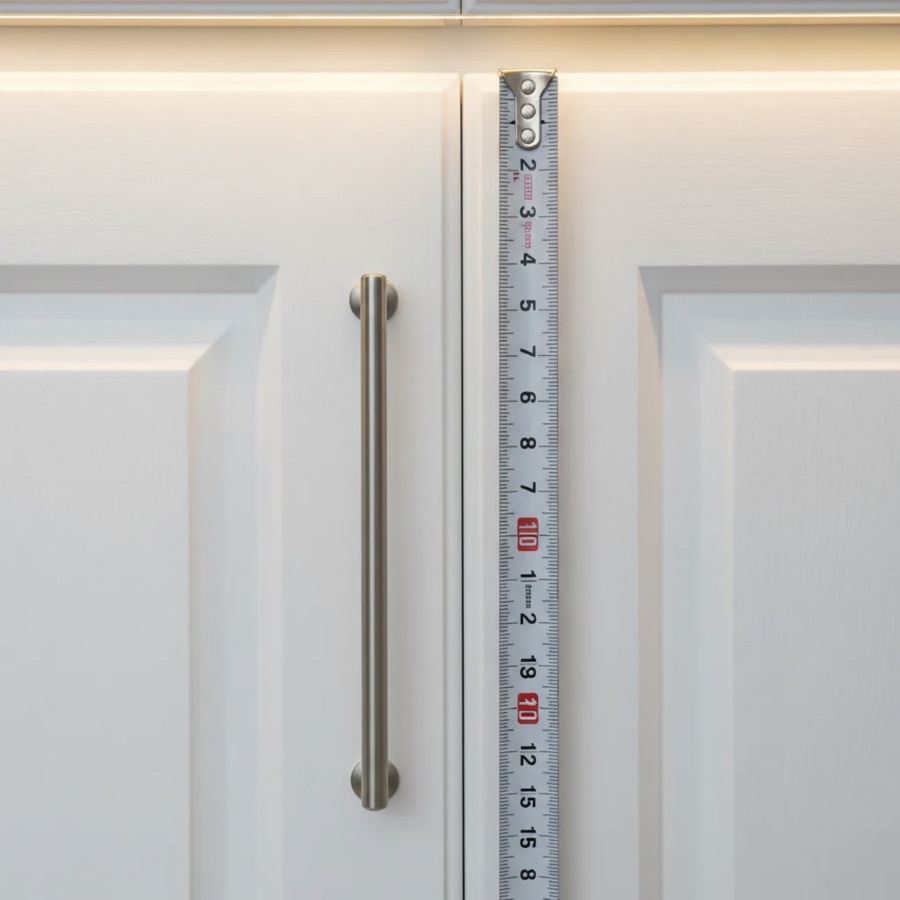
This catches people off guard more than anything else. We see it all the time on older Florida homes where original cabinetry was built with narrower stiles than what's standard now. Measure the stile width before committing to any hardware with a center-to-center (CTC) distance wider than that stile. The CTC measurement is the distance between the two screw holes on a pull. Most pulls list this on the packaging. Match your CTC to your stile width, not the other way around.
Write It All Down Before You Shop
Three numbers. Drawer front width, door width, stile width. Everything else, finish, shape, style, that's all preference. But those three numbers keep your hardware from looking off or pulling loose six months after install.
Replacing existing hardware? Measure the CTC on your current pulls first. Reusing the same hole spacing saves you from filling and redrilling. Sounds minor. But it adds up fast across 20 or 30 cabinet doors. If you're not confident about drilling new holes, that's a reasonable moment to call someone who does this every week rather than risk a mistake you can't undo.
Cabinet Door Hardware Follows Different Guidelines Than Drawer Pulls
Most guides treat all cabinet hardware the same. That's exactly where people go wrong.
Door hardware and drawer pulls are two completely different animals, and the 1/3 rule doesn't apply to both the same way. Drawer pulls are where the rule lives most cleanly. One-third the total length of the drawer front. A 15-inch drawer front needs a 5-inch pull. A 24-inch drawer front needs something in the 8-inch range. The math is simple. It works. [SOURCE: interior design industry standard reference]
But cabinet doors? Different situation entirely.
Doors are vertical. Drawers are horizontal. That one difference changes everything about how hardware reads to the eye. On a door, you're not measuring width. You're thinking about placement height and pull size relative to the door's overall height and panel layout. The 1/3 rule for doors acts more like a placement guide than a sizing guide. Most cabinet installation professionals recommend placing a knob or pull at roughly one-third of the way up from the bottom rail on a lower cabinet door, and one-third down from the top rail on an upper cabinet door. [SOURCE: cabinetry industry installation standard]
Yeah, it sounds subtle. But it matters more than you'd think. We see this constantly on jobs around Orlando, FL. Homeowners pick a pull size based on their drawer fronts, then slap the same hardware on their doors without adjusting placement. And it looks off. Not broken, just off. The kind of thing you can't stop noticing once you see it.

Here's what most guides get wrong: they tell you to match hardware size across doors and drawers for a "cohesive look." True for finish and style, absolutely. But sizing the hardware identically across every surface? That's where things go sideways. A 5-inch pull that looks perfect on a 15-inch drawer can look undersized on a tall 30-inch upper cabinet door. There's more visual real estate on that door. It can handle, and often needs, something with a bit more presence.
A few months ago we worked on a kitchen remodel where the homeowner had already ordered matching pulls for every surface. The 4-inch pulls looked great on the 12-inch drawer fronts. On the upper cabinet doors? They disappeared. We ended up recommending a larger knob for the doors to balance the visual weight without breaking the overall design. Small adjustment, big difference. That kind of mismatch is one of the most common things we run into after years of hardware consultations and installs across the Orlando area.
Knobs follow a slightly different logic than pulls on doors. A knob doesn't have length. It has diameter and projection. Sizing it is about proportion to the door panel, not a 1/3 calculation. A standard 1.25-inch to 1.5-inch knob works on most door sizes, but larger shaker-style doors with wide stiles can handle a 1.75-inch or even a 2-inch knob without looking overdone. [SOURCE: hardware manufacturer sizing reference]
Placement matters just as much as size. Too high on a lower door and you're reaching awkwardly every time you open it. Too low on an upper door and the hardware fights the sight line of the whole room. The 1/3 placement rule lands the hardware where your hand naturally goes and where your eye naturally rests.
One more thing worth knowing: inset cabinet doors have less exposed face frame to work with than overlay doors. That affects where you can physically mount hardware without hitting the frame. Common in older Orlando homes and in high-end renovations. The 1/3 rule still applies, but you'll have less flexibility in execution. Good to know before you commit to a hardware style. [SOURCE : cabinetry construction reference]
If any of this is starting to feel like a lot to sort through before buying a single pull, we get it. Give us a call and we can talk through what you're working with.
Don't Wait Until It's Too Late
Don't wait until a small problem becomes an emergency. Call (321) 624 0760 right now.
Frequently Asked Questions
What is the 1/3 rule for cabinet hardware?
The 1/3 rule means your pull length should equal about one-third of your cabinet door or drawer front measurement. It's a proportion guide, not a strict law. A 30-inch door works well with a 10-inch pull. A 24-inch drawer front looks right with an 8-inch pull. The goal is visual balance. If you're choosing new hardware for your Orlando kitchen or bathroom, this rule helps you pick the right size before you ever place an order.
Can upper and lower cabinet pulls be different lengths?
Yes, and in most Orlando kitchens, they should be. Upper cabinet doors often run 30 to 36 inches tall, while base cabinet doors run 24 to 30 inches. That means your upper and lower pulls may land at different lengths — and that's perfectly fine. Matching the finish matters more than matching the length. We swapped pulls on a Dr. Phillips kitchen job for this exact reason, and the difference was immediate once the sizes matched the door heights.
How does Orlando's housing stock affect cabinet hardware choices?
Older Florida homes often have original cabinetry built with narrower stiles — the vertical frame pieces on cabinet doors. Current standard stiles run 1.5 to 2 inches wide, but older builds can be narrower. That matters because your screw holes need to land in solid wood. If you're updating hardware in an older Orlando home, measure your stile width before choosing any pull. Our cabinet hardware guide covers how to match center-to-center spacing to your specific cabinet build.
Does the 1/3 rule apply to drawer pulls and door knobs the same way?
No, and this is where a lot of people get tripped up. For drawer pulls, you divide the drawer front width by three. For cabinet doors, you divide the door height by three. Knobs are different — they're measured by diameter, not length. A 1.5-inch to 2-inch knob works on most standard doors. Mixing knobs on doors and pulls on drawers is a classic combo, and the 1/3 rule keeps both choices in proportion with their surfaces.
What is a common mistake people make when choosing cabinet hardware in Orlando?
The most common mistake we see is picking hardware online first and measuring second. You fall in love with a pull, it arrives, and it looks wrong on the door. Nine times out of ten, it's either too short or too long. Orlando homes also have a mix of builder-grade cabinets with narrower stiles than current standards. If your pull's center-to-center spacing is wider than your stile, the screws won't catch solid wood. Always measure before you shop.
When should I call a professional instead of choosing cabinet hardware myself?
You can apply the 1/3 rule yourself — the math takes two minutes. But call a professional if you're drilling new holes into cabinet faces, dealing with inset doors, or working with rail-and-stile frames where placement gets tricky. Misplaced screw holes are hard to fix and show every day. If you're doing a full kitchen refresh or replacing builder-grade hardware across many cabinets, a pro can help you get sizing and placement right the first time.





Orlando Kitchen Cabinets Gallery
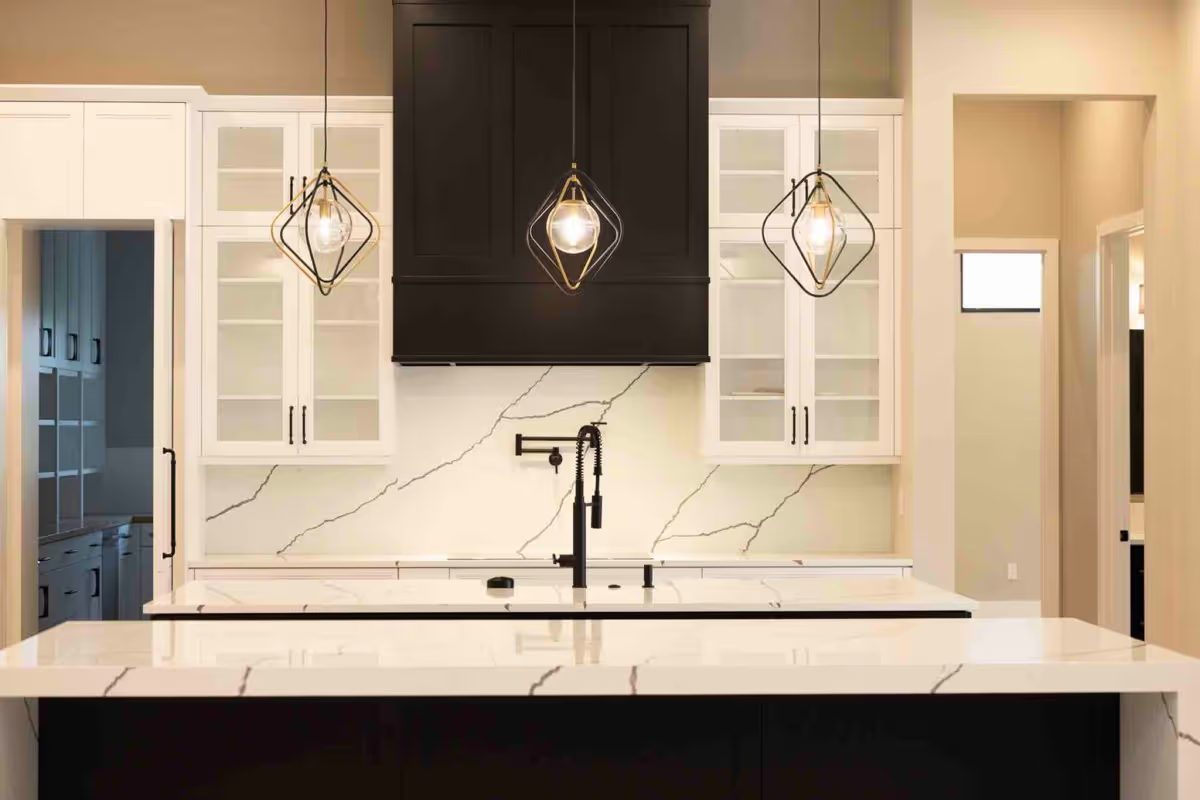
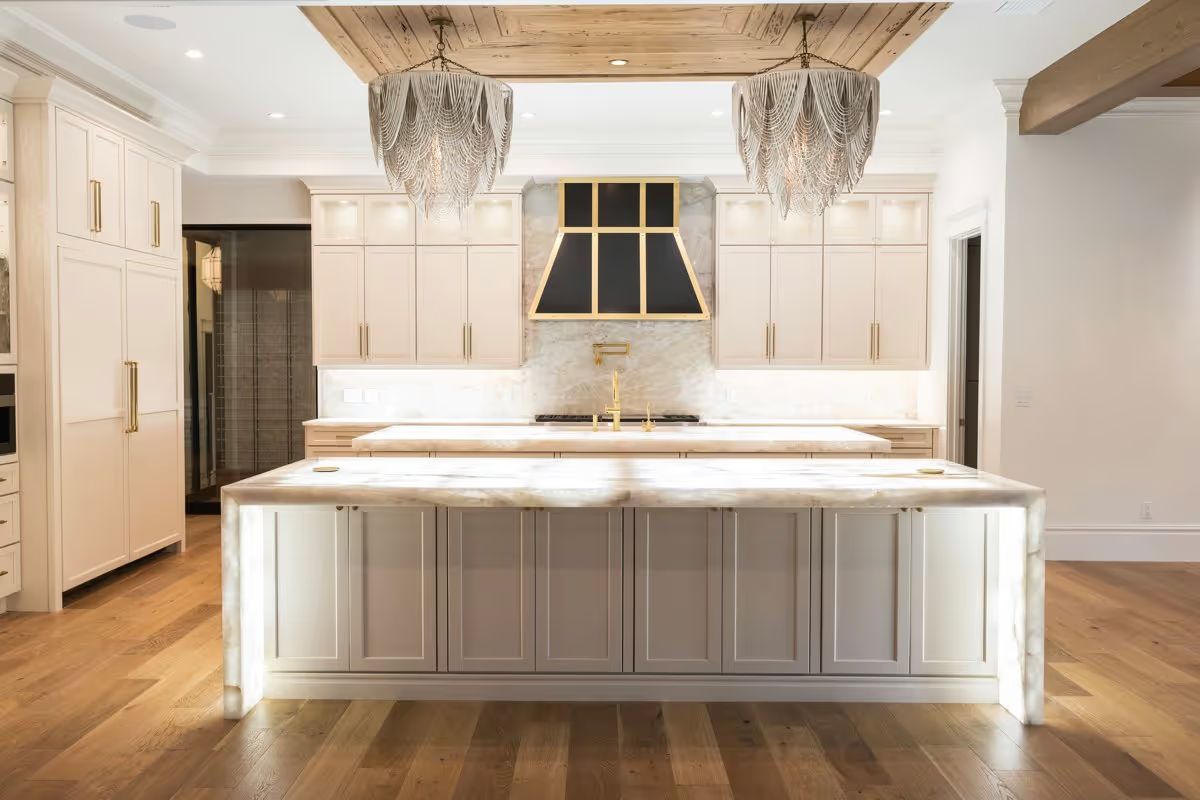
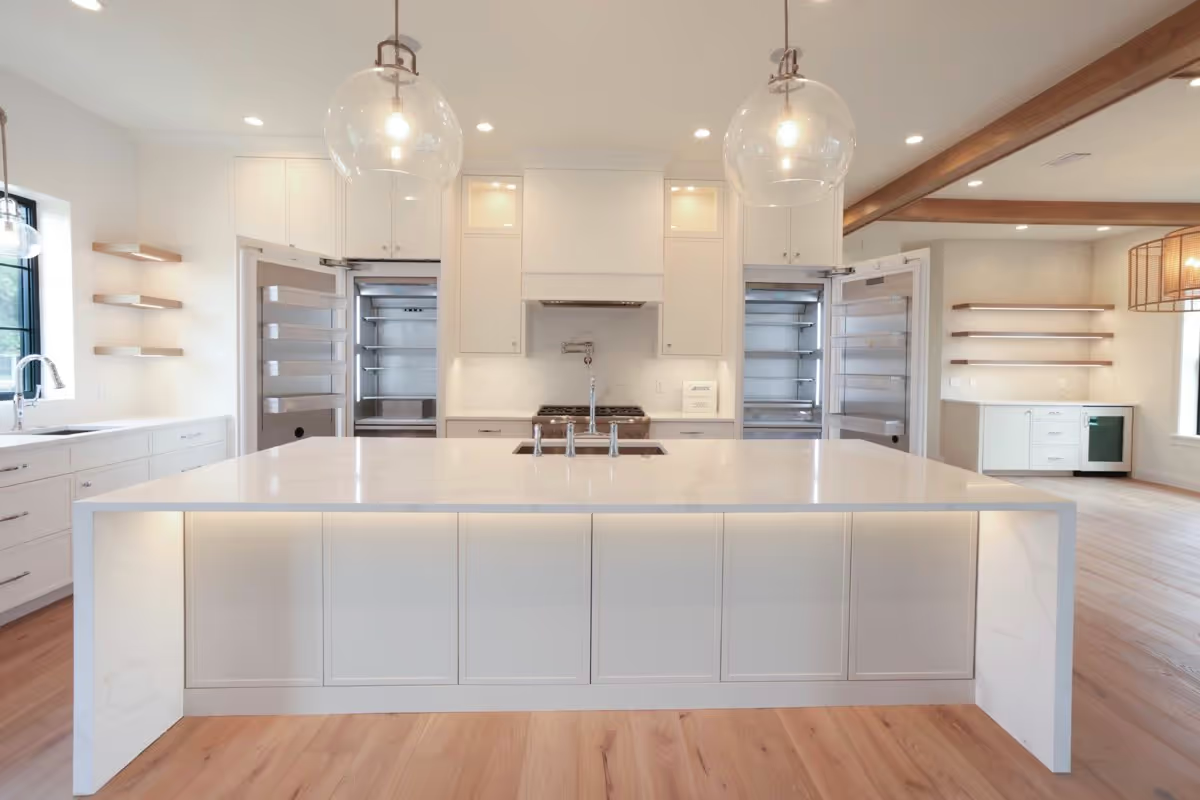
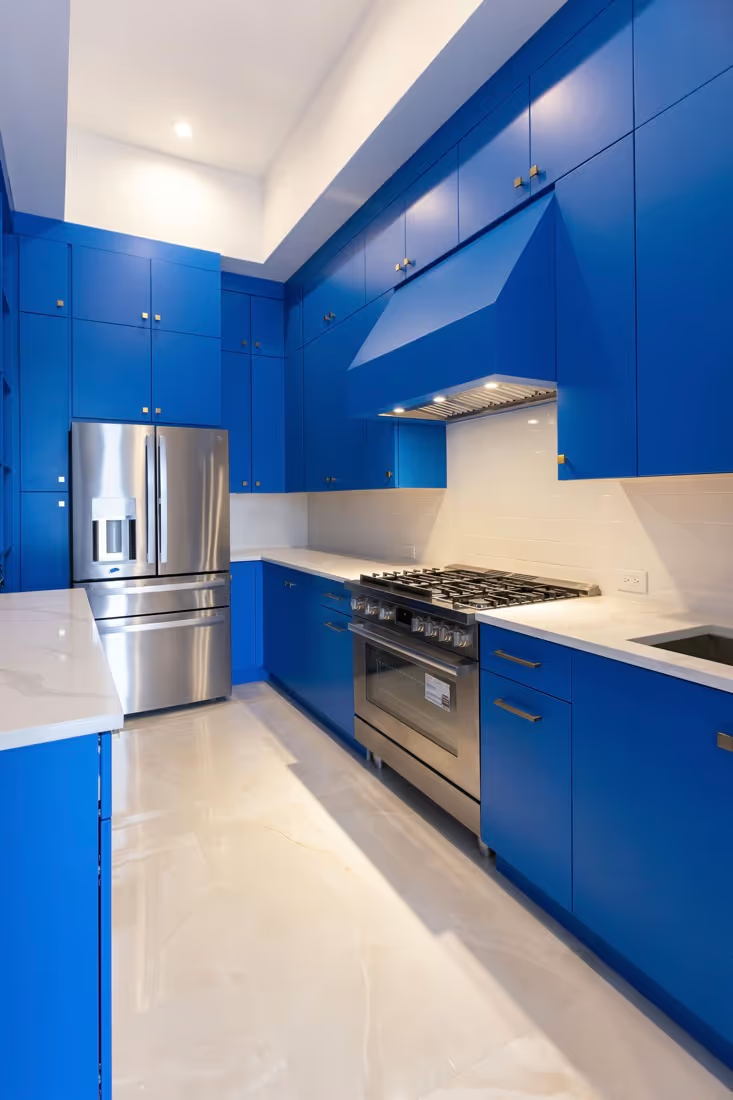
See the craftsmanship and attention to detail behind every Orlando Custom Cabinets kitchen project. Our gallery features real homes across Central Florida where we built custom cabinet solutions to fit each client's space and style. Look through our work and imagine what we can create for your kitchen.