The 1/3 Rule for Cabinet Hardware Explained
The 1/3 Rule Gives You a Simple Starting Point for Hardware Sizing
If you've ever stood in a hardware aisle holding two different pulls with no idea which one was right, you're not alone. This happens constantly. The good news? There's a simple guideline that takes most of the guesswork out of it. What Is the 1/3 Rule for Cabinet Hardware and How Do You Apply It? comes down to one core idea: your pull or handle should measure roughly one-third the width of the drawer front it's going on.
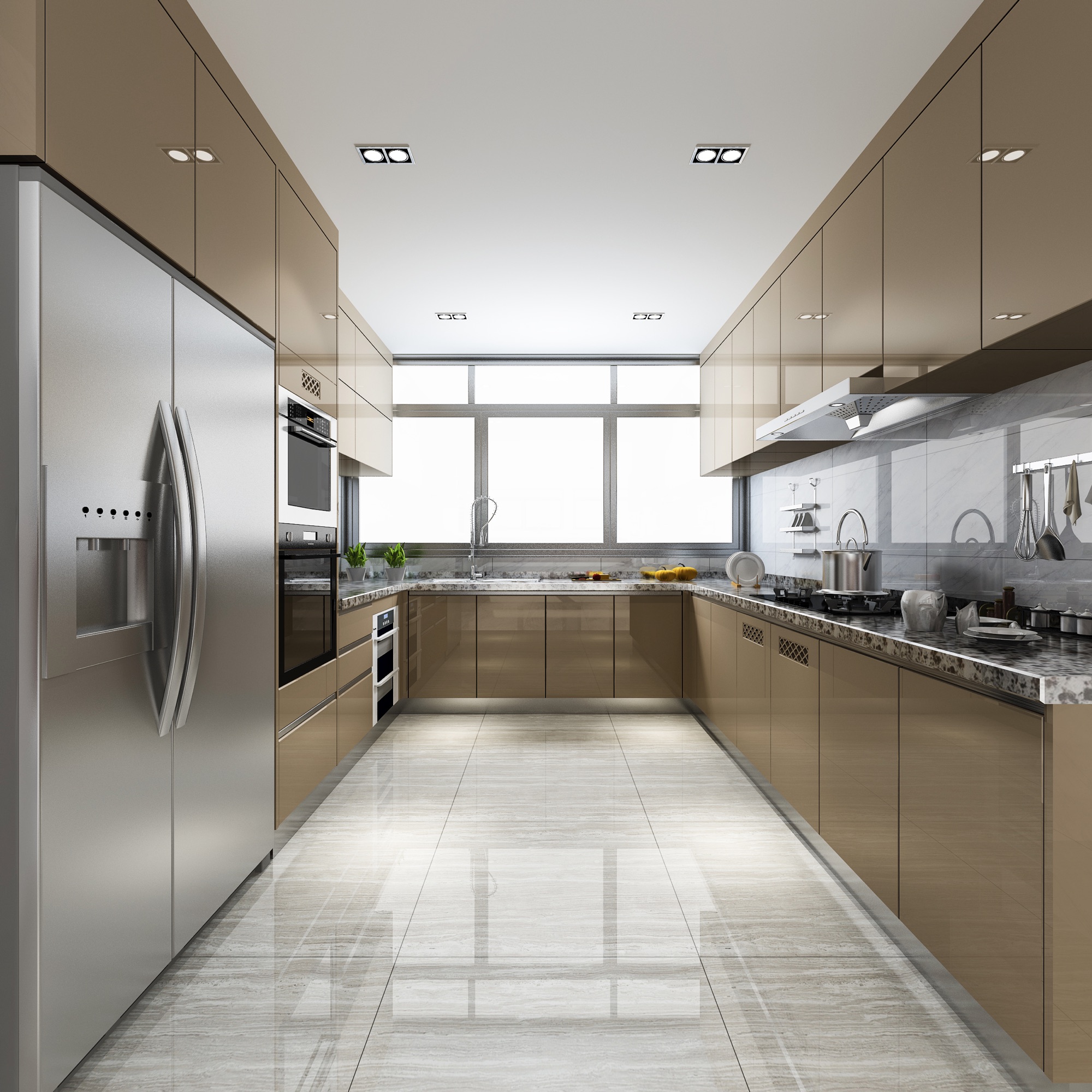
That's it. One-third. If your drawer front is 18 inches wide, you're looking at a 6-inch pull. If it's 24 inches wide, aim for something around 8 inches. The math is simple, and it works across most standard cabinet configurations.
Here's what most guides skip over — the rule applies to width, not height. A lot of people apply it to the wrong dimension entirely. They end up with hardware that looks off even though they followed the "rule." On a drawer, measure the horizontal width. On a door, measure the door's width, not its height.
Door pulls follow the same logic, just applied differently. A 15-inch wide cabinet door would call for a 5-inch pull. On a kitchen remodel off Curry Ford Road in Orlando last spring, the homeowner had installed 3-inch pulls on 18-inch doors. Technically within range by some guides — but visually it felt sparse and unfinished. Swapping to 6-inch pulls changed how the whole kitchen read. More intentional. More finished.
The 1/3 rule is a proportion guideline, not a hard law. According to the National Kitchen and Bath Association (NKBA), hardware sizing should be proportional to the cabinet door or drawer it's mounted on, with larger drawers and doors calling for longer pulls [SOURCE TBD: NKBA guidelines]. The one-third ratio has become the most widely cited starting point because it scales well across both small and large cabinetry.
Here's where it gets practical. Most standard base cabinet drawers in American kitchens run between 12 and 24 inches wide [SOURCE TBD: cabinet industry standard sizing data]. That puts the sweet spot for pulls somewhere between 4 and 8 inches for the majority of installs — a range that lines up almost exactly with what dominates the market. That's no coincidence.
Upper cabinet doors are a little different. They tend to be narrower, often 12 to 15 inches wide. The 1/3 rule still applies, but you'll often land on a 4-inch pull or a small knob. Knobs don't follow the same length formula. Still, the visual weight principle holds — a knob that looks too small on a wide door throws off the whole run of cabinets.
One thing worth telling homeowners in the Orlando area: your hardware choice also needs to account for the visual weight of your cabinet style. A thick, chunky Shaker door can carry a heavier pull. A thin, flat-panel Euro-style door looks better with something sleeker. The 1/3 rule gets you the right length. Your eye handles the rest. Just as wood type affects how cabinet surfaces look and feel, the weight and finish of your hardware needs to match the visual character of the door style you're working with.
And don't overthink the fractions. If the rule says 6 inches but you love a 6.5-inch pull, that's fine. The guideline exists to keep you in a proportional range, not lock you into a single measurement. Beautiful kitchens get built on pulls that are a half-inch off the "correct" size. What matters is that the hardware feels balanced against the cabinet face — and that's exactly what this rule is designed to help you achieve.
Measuring Your Cabinet Doors and Drawers Is the First Real Step
Before you buy a single pull or knob, get your tape measure out. This is the step most people skip — and it's exactly why their hardware ends up looking off. The 1/3 rule only works when you know your actual dimensions. Guessing doesn't cut it here.
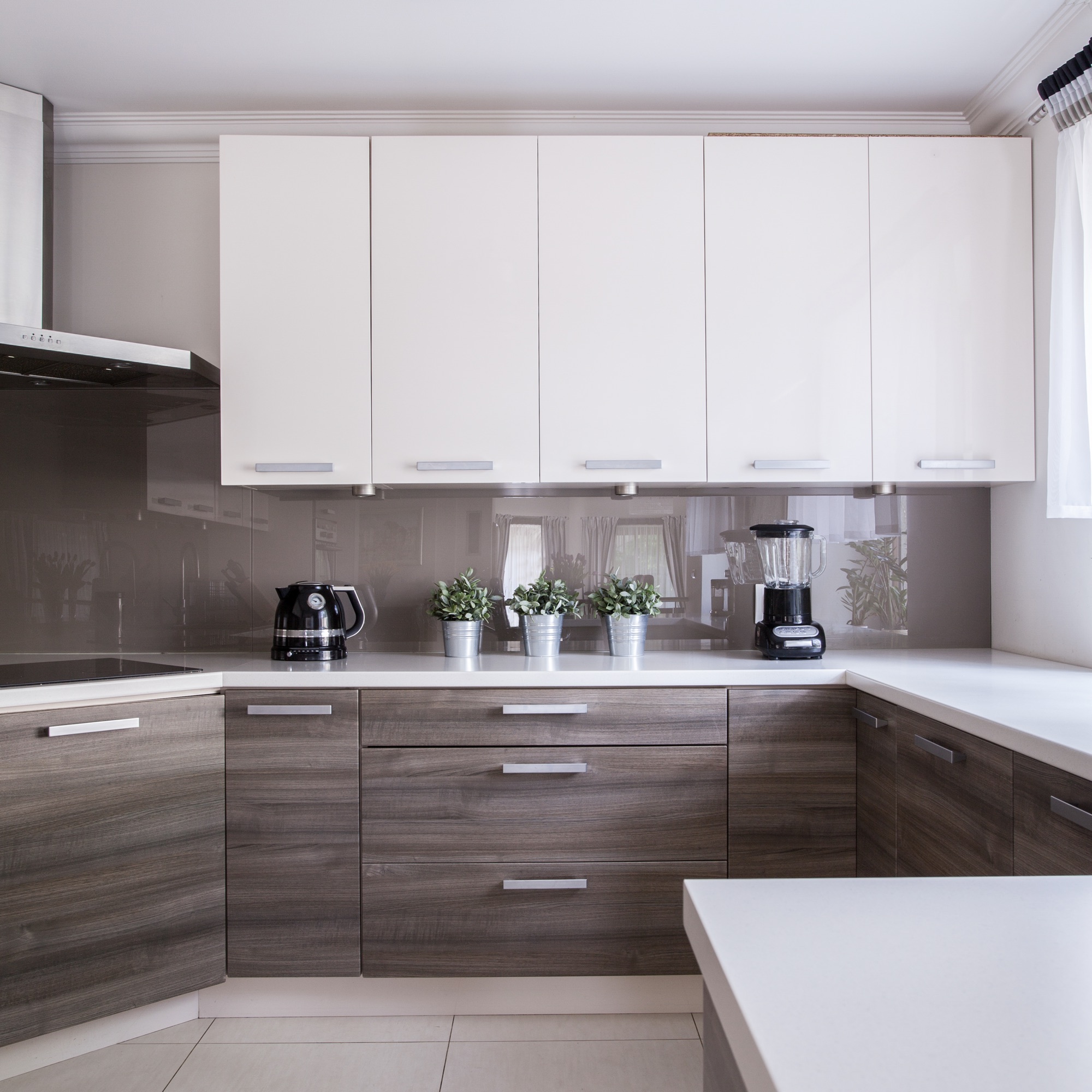
Start with your cabinet doors. Measure the full height of each door from top to bottom. Write it down. Then measure the width. You need both numbers because some doors are tall and narrow, and others are short and wide. The shape of the door changes which dimension you use for the calculation.
For a standard door pull, you're working with the door height. Take that number and divide it by three. The pull you choose should be roughly that length. So a 30-inch tall door would call for a pull close to 10 inches. That's the rule doing its job — keeping the hardware proportional to the surface it lives on. [SOURCE TBD: NKBA design guidelines or equivalent]
Drawers work a little differently. Measure the drawer width, not the height. Drawers are usually wider than they are tall, so width is the controlling dimension. Divide that width by three and you have your target pull length. A 15-inch wide drawer works well with a 5-inch pull. A 24-inch wide drawer can handle an 8-inch pull without looking heavy.
Fieldwork note: On a recent kitchen project in the Dr. Phillips area of Orlando, the homeowner had a mix of 18-inch and 24-inch drawers side by side. Running the 1/3 calculation on each one separately — rather than picking one size for everything — made the whole run of cabinets look intentional instead of random.
Here's something most guides get wrong. They tell you to measure once and move on. But cabinet doors in the same kitchen are often not the same size — upper cabinets are usually shorter than base cabinets. A 24-inch upper door and a 36-inch base door sitting in the same kitchen call for different pull lengths if you're following the rule correctly. Measure every door individually, at least the first time through.
Write your measurements in a simple grid — door or drawer, location (upper left, lower right, etc.), height or width, and the 1/3 target length. It takes five minutes and saves you a trip back to the hardware store. This happens constantly: someone buys 20 pulls in one size, gets home, and realizes three of their drawers are a different width than the rest.
One more thing about drawers specifically. Wide drawers — anything over 24 inches — sometimes get two pulls instead of one. In that case, you're not applying the 1/3 rule to pull length. You're spacing two pulls symmetrically across the drawer face. The rule shifts to placement rather than size. Measure the drawer width, find the center, and work outward from there in equal thirds. [SOURCE TBD: Cabinet hardware installation best practices — NKBA or manufacturer guidance]
In older Orlando homes — especially the ranch-style houses built in the 1960s and 1970s — cabinet dimensions don't always match modern standard sizes. If your kitchen was never updated, your door heights might be 28 inches or 32 inches instead of the typical 30. That's fine. The math still works. You're just dividing a different number by three. The rule is flexible; the measuring has to be exact. If you're working through a project like this and want to make sure your numbers are right before you buy, it's worth talking to a custom kitchen cabinets professional in Orlando who can walk through the measurements with you.
Take your time with this step. Accurate measurements are the foundation everything else builds on. Once you have them, applying the 1/3 rule becomes straightforward — and picking the right hardware gets a lot easier from there.
Door Hardware Follows Slightly Different Sizing Logic Than Drawer Hardware
Most guides treat door pulls and drawer pulls like they're the same thing. They're not. Getting this wrong is one of the most common mistakes on kitchen remodels across Orlando, FL — especially in homes where the cabinet doors are tall and narrow.
Here's the core difference. Drawer hardware is sized to match the drawer width. Door hardware is sized to match the door height — or more accurately, the vertical span of the door panel. That shift in orientation changes everything about how you measure and what looks right.

On a standard upper cabinet door that runs 30 inches tall, the 1/3 rule points you toward a pull that's roughly 10 inches long. But that same cabinet might only be 12 to 15 inches wide. A 10-inch pull on a 12-inch wide door looks heavy. Almost aggressive. This exact situation came up last spring on a condo kitchen job in the Dr. Phillips area — tall, narrow Shaker doors with almost no visual breathing room. The homeowner had already ordered 10-inch pulls based on a generic sizing chart. Walking them back to a 6-inch pull respected the door's width while still feeling proportional to the height.
So the rule bends a little for doors. You apply the 1/3 calculation to the dominant dimension — but then cross-check against the secondary dimension. If the result would cover more than two-thirds of the shorter side, scale down. [SOURCE TBD: industry hardware sizing guidelines]
Placement matters just as much as length on door hardware. Pulls on cabinet doors are typically mounted vertically, positioned about 2 to 3 inches from the edge closest to the door opening. [Source: National Kitchen and Bath Association, nkba.org] That edge placement is intentional — it gives your hand a natural pulling motion and reduces strain on the hinges over time.
Knobs follow a simpler version of this logic. On a door, a single knob gets placed at the same 2-to-3-inch offset from the opening edge, centered vertically on the rail — usually the bottom rail on upper cabinets, the top rail on lower cabinets. Most people know this part. What most guides skip is that knobs on tall pantry doors or appliance garage doors often need to move up or down to match eye level and reach comfort, not just the geometric center of the rail. [SOURCE TBD: ergonomic hardware placement research]
There's also the question of horizontal versus vertical pull orientation on doors. Some designers mount pulls horizontally on cabinet doors for a more modern, uniform look across the whole kitchen. Valid choice. But when you go horizontal on a door, you're back to using the door width as your reference dimension — which means re-running your 1/3 calculation from scratch. Kitchens where someone mixed vertical pulls on some doors and horizontal pulls on others without recalculating look unresolved. Not intentional. Just inconsistent.
One more thing worth knowing: inset cabinet doors — the style where the door sits flush inside the frame rather than overlapping it — often require shorter hardware than face-frame or overlay doors of the same size. The visual frame around an inset door adds perceived width and height, so the hardware reads larger than it actually is. Scaling down by one size often produces a cleaner result. [SOURCE TBD: cabinetry design reference]
If you're working through door hardware sizing for a kitchen or bathroom project and want a second set of eyes on the numbers, the parent page on custom kitchen cabinets covers the full process from measurement to final placement.
Now that you know how the math works, you don't have to figure out the hardware alone. Our team handles cabinet installation across Orlando every day — and we bring this same level of detail to every project. Ready to get your measurements reviewed and your hardware selected by someone who does this for a living? Call us at (321) 624-0760 or schedule a consultation online. You've done the research. Let us handle the rest.
Request a Quote
Use the form below to tell us about your project, An experienced designer will be in touch with you shortly.
Frequently Asked Questions
What exactly is the 1/3 rule for cabinet hardware?
The 1/3 rule means your pull or handle should measure about one-third the width of the drawer front it goes on. So an 18-inch drawer gets a 6-inch pull. It's a proportion guideline, not a strict law. It keeps your hardware looking balanced against the cabinet face. Most standard kitchen drawers run 12 to 24 inches wide, so you'll usually land on a pull between 4 and 8 inches. That range lines up with what's most common on the market — and that's no coincidence.
Does Orlando's humidity affect which cabinet hardware finishes hold up best?
Yes, Orlando's heat and humidity can affect how certain hardware finishes wear over time. Moisture-heavy environments like kitchens and bathrooms near windows can cause some finishes to tarnish or corrode faster. Brushed nickel and oil-rubbed bronze tend to hold up better in humid conditions than polished chrome. If your home has older single-pane windows or poor ventilation — common in some older Orlando neighborhoods — that adds extra moisture exposure. Choosing a durable finish matters as much as getting the size right.
When should an Orlando homeowner call a professional instead of sizing hardware themselves?
You can apply the 1/3 rule yourself on a straightforward kitchen with standard cabinet sizes. But call a professional when you have custom cabinetry, mixed drawer sizes, or unusual door configurations. Older homes in areas like College Park or Milk District sometimes have non-standard cabinet dimensions that don't follow typical sizing charts. A professional can also catch issues like misaligned drill holes or doors that need adjustment before new hardware goes on. Getting it right the first time saves you from filling holes and redrilling.
Do you measure the door height or width when sizing a cabinet door pull?
For cabinet doors, you measure the door height — not the width. This trips up a lot of people. Doors are usually taller than they are wide, so height is the controlling dimension. Divide that height by three to get your target pull length. A 30-inch tall door works well with a pull close to 10 inches. Drawers are the opposite — measure the width. Getting this right is one of the first things we walk through on our cabinet hardware sizing page.
What is a common mistake people make when applying the 1/3 rule?
The biggest mistake is applying the rule to the wrong dimension. People measure drawer height instead of width, or door width instead of height. That gives you a pull that's technically calculated — but visually off. Another common mistake is picking one pull size for every cabinet in the kitchen. If you have a mix of 18-inch and 24-inch drawers, each one should be measured separately. Running the calculation on each drawer individually keeps the whole run of cabinets looking balanced and intentional.
Can you use knobs instead of pulls, and does the 1/3 rule still apply?
Knobs don't follow the same length formula as pulls, but the proportion principle still applies. A knob that looks too small on a wide door throws off the whole cabinet run. Knobs work best on upper cabinet doors and smaller drawers. For larger base cabinet drawers — anything over 18 inches wide — a pull usually looks more balanced than a knob. If you mix knobs and pulls in the same kitchen, keep the finish consistent so the hardware reads as a set rather than a mismatch.





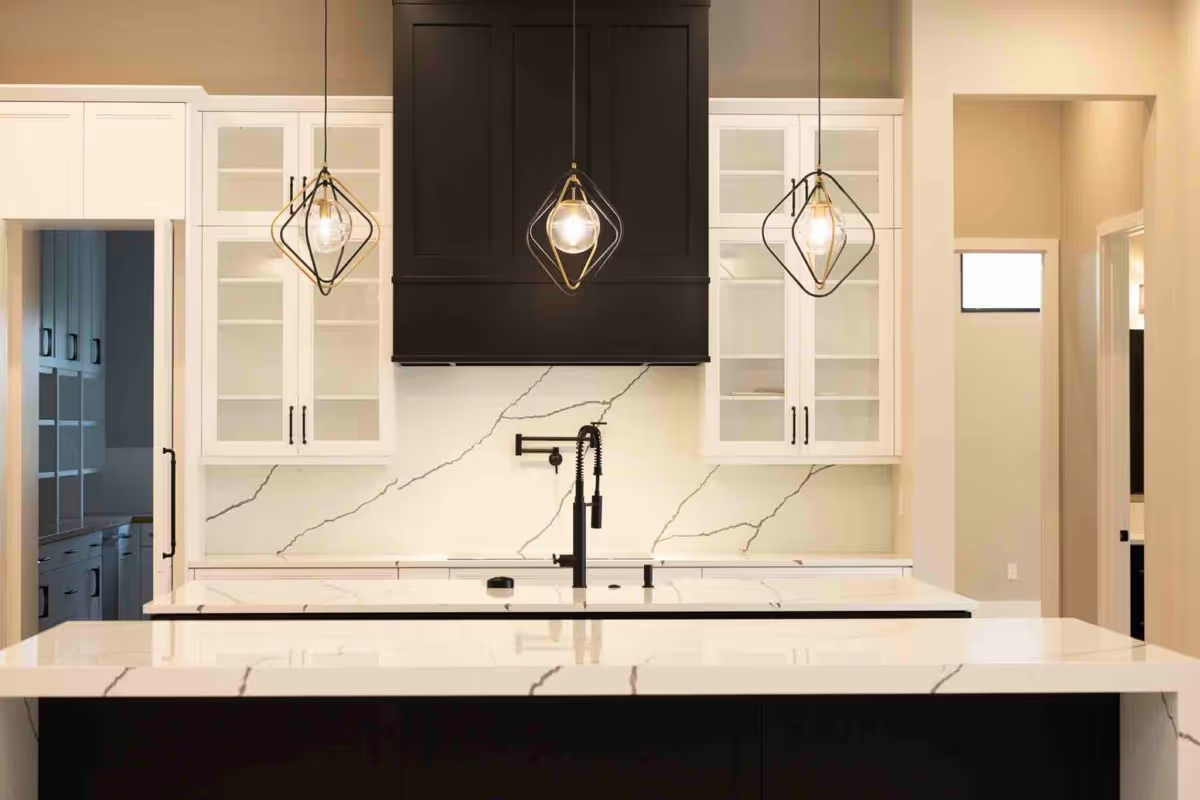
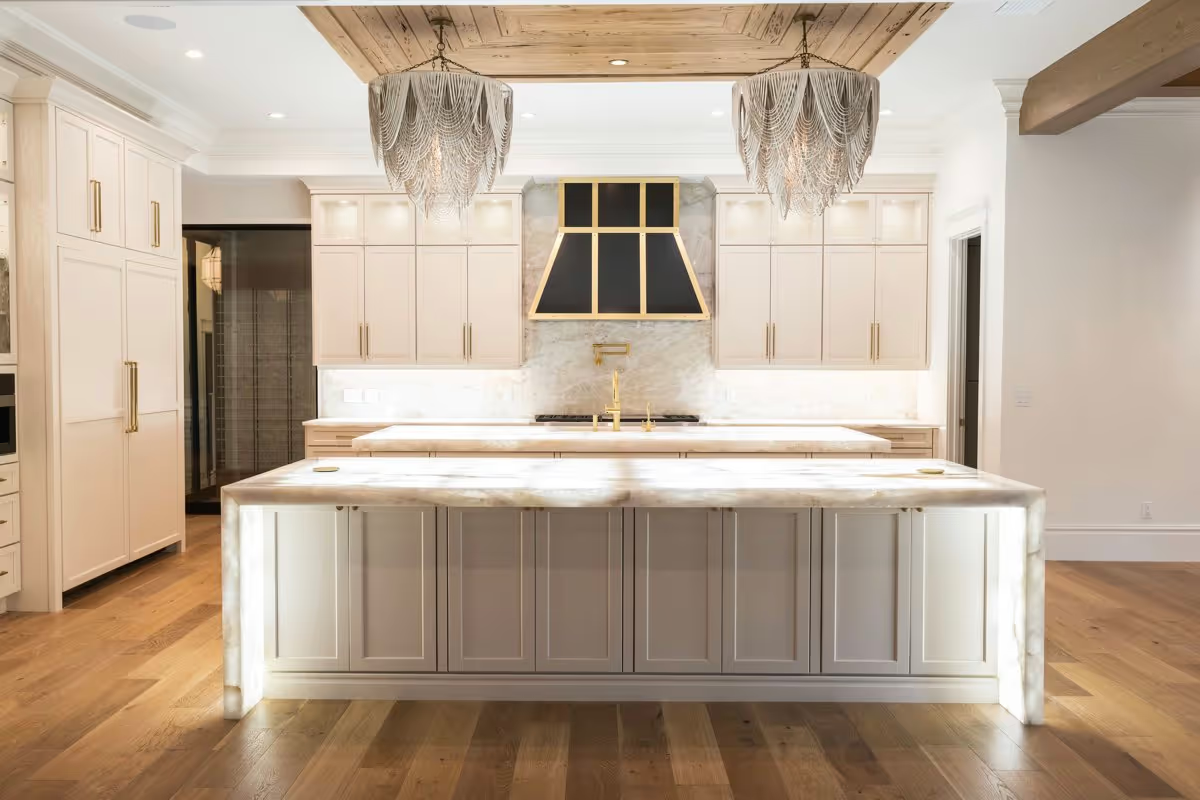
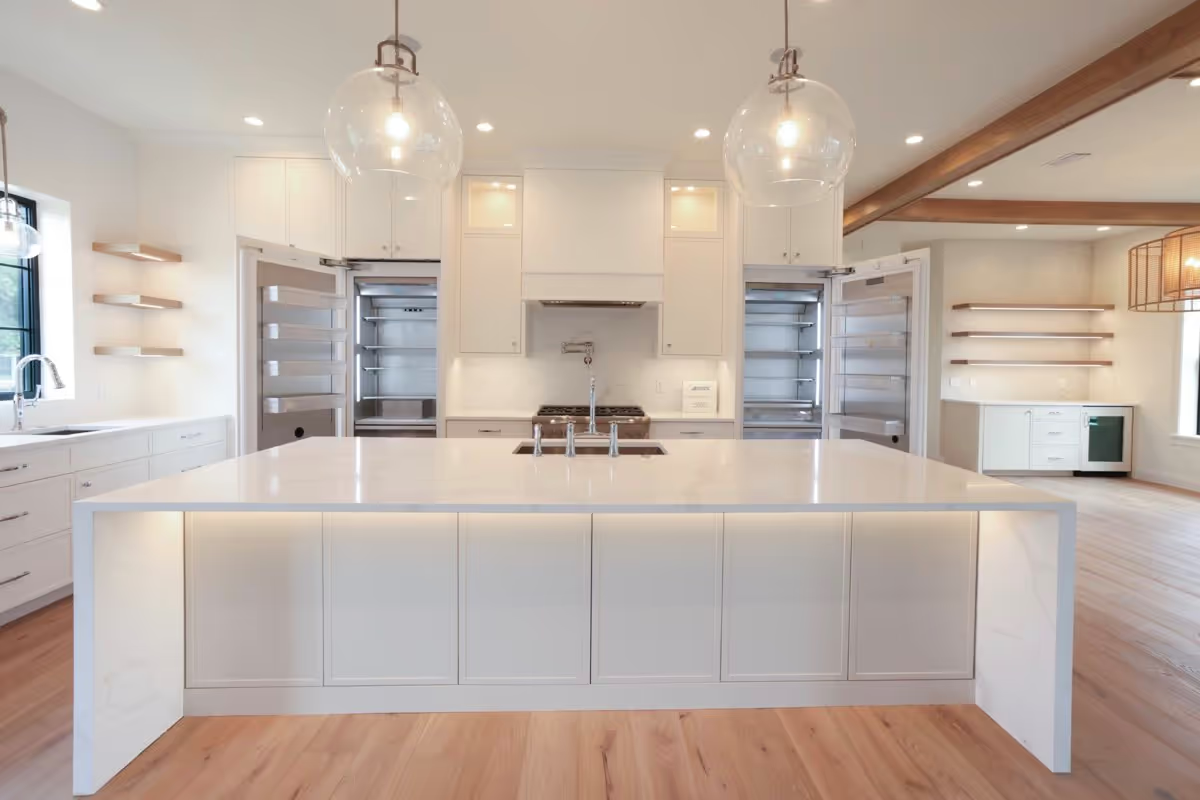
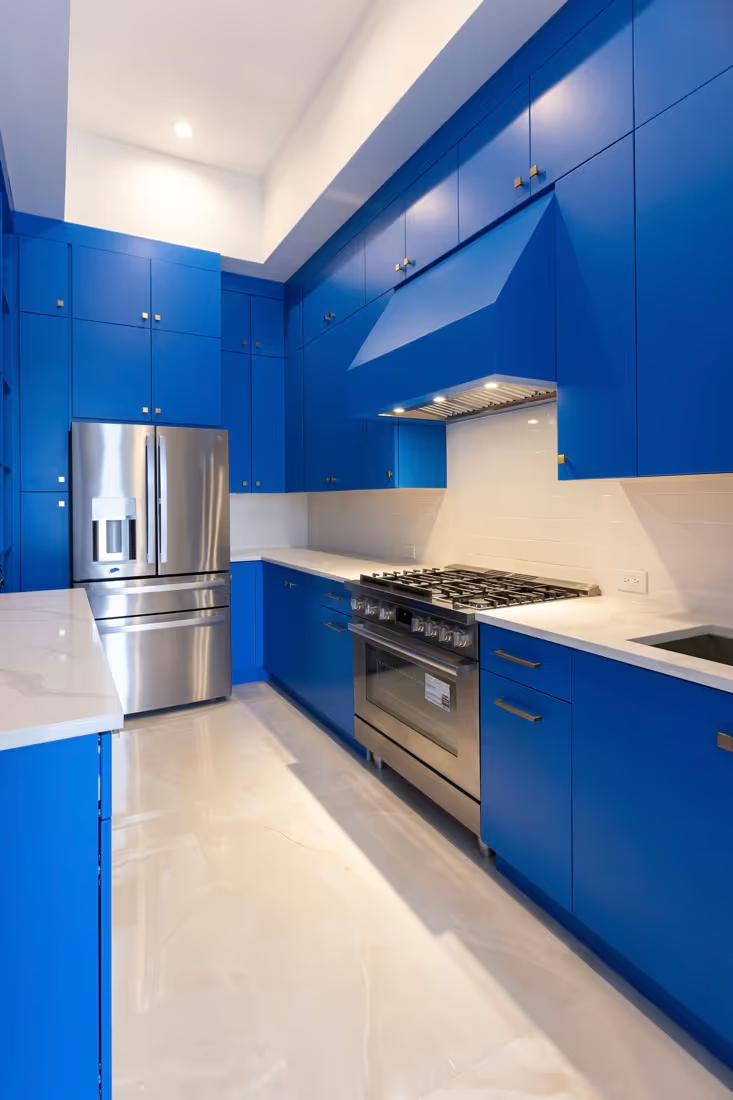
Orlando Kitchen Cabinets Gallery
See the craftsmanship and attention to detail behind every Orlando Custom Cabinets kitchen project. Our gallery features real homes across Central Florida where we built custom cabinet solutions to fit each client's space and style. Look through our work and imagine what we can create for your kitchen.